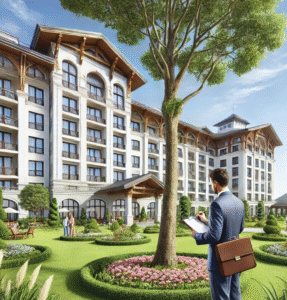
When most people stay at a hotel, they think about clean rooms, good service, and maybe the view or landscaping. Rarely do guests—or even hotel operators—think about the hidden risks posed by trees on the or near the property. But trees, when neglected or mismanaged, can become serious liabilities. From falling limbs to root heave damaging foundations, a hotel’s surrounding greenery can be a source of hazards, legal exposure, and reputational risk. For that reason, in litigation or risk-management, a Tree Expert Witness (also called an arborist expert witness) often becomes indispensable for a hotel.
In this article, we’ll explore why a hotel might need a tree expert witness, what roles such an expert can play, and how including one early on can mitigate risk and strengthen legal defense or proactive claims strategy.
The Hidden Risks Hotels Face from Trees
Many hotels pride themselves on lush landscaping, tall shade trees, and scenic grounds. But these aesthetic assets come with ongoing maintenance and safety duties. Key risks include:
-
Falling limbs or branches
In 2021, a large tree branch collapsed at a hotel pool in Honolulu, injuring seven people, including serious head injuries. https://www.wymt.com+1
A dramatic incident like that illustrates the potential for wrongful injury claims tied directly to tree hazards. -
Tree failure injuring workers or guests
In San Diego, a tree trimmer working at a hotel was injured when the tree uprooted while he was tied into it, causing broken limbs and facial lacerations. Los Angeles Times
Such accidents can lead not only to worker’s compensation claims, but third-party liability if guests or visitors are impacted. -
Root damage to foundations, sidewalks, or utility infrastructure
Over time, roots may buckle paths or crack underground plumbing, creating trip hazards or structural liabilities. A guest who trips on a raised sidewalk may tie it back to “neglect” of tree roots near walkways. -
Storm, wind, or pest stress exacerbating tree hazards
After storms, even seemingly healthy trees may suffer hidden internal damage (cracks, root destabilization, decay) that make them vulnerable to failure. A hotel must demonstrate that it performed proper inspections or pruning to mitigate risk. -
Regulatory or local government code compliance
Municipalities often have tree preservation ordinances, setback rules, or requirements for hazard inspections. Failure to comply can lead to fines, order to remove trees, or stricter scrutiny after an incident.
Because of these threats, if a guest or third party is injured or property damaged, litigation can follow—and a hotel’s defense must grapple with the technical arboricultural aspects. That is where a tree expert witness becomes critical.
What a Tree Expert Witness Actually Does
A tree expert witness, typically a certified arborist or a professional specializing in tree risk assessment, can provide a range of services useful both before and during litigation. Here are key roles:
-
Pre-incident risk assessment
Before any lawsuit arises, a hotel’s risk management team or insurer may commission a tree inspection. The expert identifies trees or limbs that pose unacceptable failure risk, recommends pruning or removal, and documents conditions in a defensible report. -
Investigation and cause analysis
After a tree-related incident or claim, the expert visits the site, collects data (soil, root plate, decay, crack patterns, species characteristics), examines weather history, and determines the proximate cause of failure (if any). They may also assess whether maintenance was reasonable or negligent. -
Standard of care benchmarking
A major task of the expert is to opine on what is the industry standard of care for managing trees in a hospitality or commercial context (frequency of inspection, pruning protocols, professional credentials). The expert can compare the hotel’s practices to accepted norms. -
Opinion on negligence and causation
In a case where someone is injured, the expert can offer testimony on whether the failure was foreseeable, whether the hotel should have known, and whether proper maintenance would have prevented the harm. -
Rebuttal to opposing experts
Often, the plaintiff’s attorney will hire their own arborist. The hotel’s expert can challenge flawed analysis, offer alternate theories, or question assumptions. -
Risk modeling and future mitigation
Post-incident, the expert may propose a plan to reduce future liability: tree replacement, more frequent inspections, signage, structural support, or species changes.
Courts generally admit expert testimony if the expert is qualified, uses reliable methodology, and bases opinions on sufficient facts. In tree-related litigation, method challenges often go to weight rather than admissibility, so a well-credentialed expert is important. Expert Witness Blog
Why Hotels, in Particular, Have Additional Reasons to Use One
Hotels face some unique pressures that make a tree expert especially relevant:
Guest safety expectations and liability
Hotel guests are classified as “invitees,” meaning the hotel owes a high duty of care to inspect, warn, or remedy hazards. A failing tree limb or root-heaved walkway can easily become a premises liability claim. Courts will want evidence that the hotel actively managed tree risks and did not merely rely on aesthetics.
Multiple stakeholders and insurance exposure
Hotels often have many insurance layers, liability carriers, and third-party contracts (franchise agreements, event agreements, municipality easements). The more complex the structure, the more technical scrutiny any claim will receive. A tree expert can interface with insurers early, help quantify risk, and assist in settlement negotiations.
Reputation and public relations
A tree failure causing injury reflects badly in the press. Hotels live and die by guest confidence and reviews. If a hotel can show they proactively retained expert arborist oversight—even before litigation—that narrative helps protect brand reputation.
Regulatory, environmental, and landscaping integration
Hotels often promote their landscaping as a selling point. They must balance preservation (especially in historic properties or urban areas) with safety. A tree expert can advise in the design, pruning, or replacement process and provide defensible documentation that the hotel respected preservation laws while mitigating risk.
Complexity of tree science
Tree failure is rarely obvious: hidden decay, root rot, internal cracks, fungal infestation, soil conditions, moisture stress, wind forces—all interact. Average hotel staff or general contractors lack that expertise. The technical subtleties require someone trained. Without a qualified expert, a hotel’s legal team might fumble technical detail under cross-examination.
When to Engage a Tree Expert Witness
Knowing when to bring in the expert is just as important as having one. Key timing includes:
-
During risk audits or annual inspections
Proactive engagement means hazards are identified before any incident. -
Immediately after a reported tree-related incident
So evidence is preserved (broken pieces, root plate, soil moisture, site conditions) before remediation occurs. -
Before responding to a claim
An expert can review notice letters, identify weak factual bases, and help shape the hotel’s defense or settlement position. -
Prior to major landscaping changes or tree removals
So work is defensible and documented, and to reduce future exposure. -
When there is a pending lawsuit or threat of litigation
The expert’s testimony will likely be critical in summary-judgment motions or trial.
Delaying retention invites problems: lost evidence, memory fade, destruction by cleanup, or spoliation arguments.
Benefits and Strategic Advantages
Here’s what a hotel stands to gain by using a tree expert witness (beyond merely responding to litigation):
-
Stronger defense credibility
In court, judges and juries expect technical experts on niche issues. An informed arborist can strengthen the defense’s posture. -
Cost avoidance via early remediation
Identifying and correcting a high-risk tree early is often far less expensive than defending a multimillion-dollar injury claim. -
Better settlement negotiating position
Well-documented expert opinions, with professional standards cited, strengthen negotiating leverage. -
Insurance collaboration and premium control
Insurers are more amenable to risk management when backed by professional audits and reports. Over time, the hotel may lower premiums. -
Public perception reinforcement
When a hotel can publicize that it hires professionals to inspect and maintain trees, it signals responsibility and care.
Caveats and Best Practices
While tree experts bring value, hotels must do several things right:
-
Choose a properly credentialed expert
Certifications like ISA Certified Arborist, Tree Risk Assessment qualifications, experience in litigation, and familiarity with standards like ANSI A300 or ISA’s Best Management Practices are essential. -
Ensure timely disclosure and admissibility
In many jurisdictions, experts must be disclosed timely and reports properly structured. Failing to conform with expert disclosure rules may lead to exclusion. -
Maintain clear documentation of inspections and maintenance
A good expert can only do so much if the hotel lacks baseline records (pruning logs, prior inspection reports, photographs, contracts). -
Limit scope and collaboration with legal team
The expert’s analysis should remain objective. Legal team guidance should not push expert conclusions but coordinate scope and communication. -
Manage spoliation and site preservation
After an incident, avoid sudden removal of trees or debris without documentation, as that may lead to sanctions.
Case Example Illustrations
To underscore the practical significance:
-
In Waikiki, a large banyan tree branch fell near a hotel’s pool, injuring seven people, prompting investigations and liability exposure. https://www.wymt.com+1
-
In San Diego, a palm tree uprooted while maintenance was in progress, injuring a tree trimmer at a hotel site—underscoring that even professional work can go wrong. Los Angeles Times
-
On the risk assessment front, one hotel blog emphasized that beyond aesthetics, tree protection is “a crucial strategy that benefits hotel operations, branding, and environmental impact.” port-washington-inn.com
These real-world instances show both the dangers and the imperative for expert guidance.
Conclusion
Hotels cannot view their trees as mere landscaping props. In environments with guests, staff, and high foot-traffic, trees carry inherent risk. A tree expert witness isn’t just a reactive tool for lawsuits—it’s a proactive risk control, a technical authority, and a reputation protector. By retaining a qualified arborist to inspect, document, and opine on tree conditions, hotels bolster their legal posture, reduce exposure, and demonstrate that guest safety is a serious priority.
If you ever need help writing in more detail about how to select a tree expert, how to structure a report, or how to integrate one into hotel risk management, just let me know!