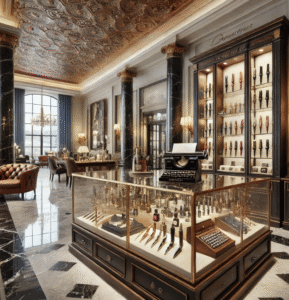
In today’s hyper-competitive hospitality landscape, hotels strive not only to offer a place to sleep, but to deliver unique, memorable experiences that resonate long after guests check out. One way to distinguish your property and deepen guest connection is by incorporating a fountain pen store right on your hotel premises. It might at first glance sound niche or even antiquated — but executed well, it offers brand differentiation, additional revenue, and an unforgettable touchpoint. Below, we explore why a hotel should consider such an offering, how it fits broader trends, and what it takes to make it succeed.
Imagine a guest arrives late in the evening, tired from travel, and reaches into their luggage to retrieve a pen—only to find it’s run dry or missing. Rather than unraveling, they stroll downstairs to your elegant lobby boutique, choose a fine fountain pen, and sign a postcard or journal entry before bed. That small act becomes a story they tell: “I bought a beautiful pen at the hotel.” That is the kind of emotional, tactile memory that elevates a stay from transactional to meaningful.
Hotels often house gift shops, boutiques, or pop-ups selling local products, fashion, or art. But adding a dedicated fountain pen store sends a message: that you care about the art of writing, craftsmanship, detail, and timeless luxury. This is not just retail; it’s storytelling, curation, and brand reinforcement.
In this article, I’ll lay out the case for why a fountain pen store belongs in a hotel, how it supports your guest experience and financials, and what practical considerations will make it work. Along the the way, we’ll touch on industry trends and hotel retail successes from sources like Hospitality Net, Hotel Dive, and Gensler’s discussion of hotels in retail environments.
The Strategic Value of In-Hotel Retail
Before diving into fountain pens specifically, it’s worth seeing how retail strategies in hotels are evolving. Hotels are no longer merely lodging; many are transforming into lifestyle hubs with curated retail spaces. Gensler, in a recent article, highlights that retail inside hotels “has evolved beyond the traditional souvenir shop or gift boutique” and is being used as a way to “enhance the guest experience while also drawing in the local community.” Gensler
Business Traveller recently reported that “hotel shops are the new concept stores—and travelers are obsessed,” noting that guests now expect boutique-level curation and uniqueness rather than generic gift store fare. Business Traveller Similarly, Forbes described how some of the world’s finest hotels are redefining luxury retail by integrating immersive, brand-driven stores beyond mere commoditization. Forbes
Thus, adding a fountain pen store can ride this wave: a specialized, high-end boutique that underscores your hotel’s identity rather than just another shop with tchotchkes.
Differentiation in a Crowded Market
In many markets, hotels compete heavily on amenities: spas, rooftop bars, concierge services, meal programs. But guests are increasingly seeking authentic experiences and stories they can bring home. A fountain pen store is one of the few amenities that can’t just be replicated by any hotel—it speaks to a niche of connoisseurs, writers, stationery lovers, and travelers who delight in fine details.
Brand Elevation & Storytelling
A fountain pen collection communicates values: you value craftsmanship, permanence, thoughtfulness, legacy. You invite guests to slow down, to write, to reflect. You reinforce an identity of quiet luxury, of artistry, of lasting memory rather than disposable impulse. That narrative becomes part of your hotel’s brand story.
Revenue Diversification
A well curated boutique does more than serve the guest—it can contribute meaningfully to non-room revenue. High-end pens and accessories carry margins well above typical souvenir items. Even if only a small fraction of guests buy, the per-unit value can be significant. Multiply that by repeat stays and local walk-ins, and you gain an incremental revenue stream.
Guest Retention & Loyalty
When a guest buys a pen from your in-hotel store, that pen becomes a physical reminder of their stay. Every time they use it, they remember your hotel. If the pen is branded or subtly marked, it becomes a little piece of loyalty reinforcement. Over time, that kind of emotional anchor aids return visits or word-of-mouth referral.
Why Fountain Pens Specifically
Why not jewelry, art, or perfumes? What is special about fountain pens?
Fountain Pens Are Experiential
Unlike a mass-market souvenir, a fountain pen is purposeful. It engages the user: filling ink, feeling the weight of the nib, writing over quality paper. It’s not disposable. It invites repeated use. That emotional connection is rare in retail today.
Appeals to a Growing Niche
The fountain pen community may be niche, but it’s active, passionate, and global. Collectors, journaling enthusiasts, calligraphers, business travelers, authors—all constitute a demographic that values provenance, quality, and heritage. This audience often seeks destinations where they can shop, try, compare. A hotel that hosts such a boutique becomes a destination in itself for stationery lovers.
Low Overhead for High Aesthetic Impact
Compared to jewelry, perfume, or large fashion stock, a fountain pen boutique can occupy modest square footage, yet deliver high visual impact. Display cases, lighting, test desks, ink stations—these require careful design but not massive real estate. The inventory is compact, and unit values tend to be high.
Very Few Direct Competitors
In almost no destination is there a full, well curated fountain pen boutique inside a hotel. That rarity becomes an advantage: you fill a gap in the guest experience. Guests don’t expect it, so when they find it, it feels novel and memorable.
Making It Work: Practical Considerations
A concept is only as good as its execution. Here are the key elements to get right:
Location & Layout
Your fountain pen boutique should ideally be located in or adjacent to the hotel’s public spaces—lobby, gallery, or boutique cluster. It should be visible, welcoming, and integrated, not hidden away. A glass façade, open entry, and inviting display counters help create curiosity.
Inside, allow for a writing station where guests can test pens and inks on premium paper. Include comfortable seating or a small table. Offer lighting that accentuates nibs and finishes. Keep the footprint modest (for example, 200–400 square feet), but make every inch count with elegant displays and minimalistic, elegant decor.
Product Selection & Curation
Curate a balanced inventory of entry-level, mid-tier, and premium fountain pens. Offer complementary items: inks (bottles and cartridges), notebooks, leather pen cases, cleaning kits, converter systems, and even pen repair or nib-adjustment services if possible. Bring in exclusive or boutique brands that guests cannot easily source locally. Partnering with limited editions or private-label offerings tied to the hotel’s locale can add uniqueness.
Staff Expertise & Guest Engagement
Staffing must be thoughtful. At least one specialist knowledgeable in fountain pen mechanics, ink properties, and nib characteristics is essential. They should guide guests in selecting pens suited to their hand, writing style, and preferences. Occasional events—pen clinics, ink tasting, handwriting workshops—both for guests and locals—foster community and drive foot traffic.
Branding & Integration
Your fountain pen boutique should feel like part of the hotel, not an afterthought. Use signage, packaging, and even room stationery to tie into the boutique. Offer welcome-back pen vouchers or loyalty discounts. Include photos of the boutique on your website and social media. You might even provide a complimentary branded fountain pen for high-tier guests or event clients.
Inventory & Cost Management
Because pens and accessories have high per-unit value, inventory turnover is important. Use tight inventory control, consignment options, and demand forecasting. Monitor which models sell vs. sit. Keep a small “test” stock and reserve higher inventory in a back room or regional fulfillment center. Consider online extensions: allow guests to reorder items from their stay via a hotel shop web portal.
Marketing & Events
Promote the fountain pen boutique as part of your guest experience package. Include it in welcome emails, room materials, concierge recommendations. Host pen-oriented events, open-house, or collaborations with nearby art shops, universities, or calligraphy groups. Offer guest workshops. Invite influencers in the stationery world. Cross-market with your hotel events (e.g., wedding packages, corporate retreats) by offering branded pen options for attendees.
Supporting Trends & Industry Context
To strengthen the rationale, here are some relevant hospitality industry trends and news:
-
Hotels are increasingly becoming retail-driven, mixed-use environments, where curated retail spaces are part of the guest journey. Gensler
-
The hotel boutique is becoming a premium experience, not just souvenir retail: travelers expect more curated, immersive shopping experiences in hotels. Business Traveller
-
According to Hospitality Net, hoteliers are actively looking for fresh methods to differentiate and deepen guest engagement. Hospitality Net
-
In the broader retail and luxury realm, hotels are partnering with brands and elevating in-house stores to rival destination shopping. Bloomberg+1
These trends confirm that a fountain pen boutique is not a gimmick but aligned with the direction in which luxury hospitality, retail convergence, and experience design are heading.
Potential Risks & Mitigation
No initiative is without risks. Here are some you should consider—and ways to mitigate them:
-
Low conversion: Many guests might browse but not buy. Mitigate by ensuring staff are well trained to engage genuinely without pressure, offering entry-level pieces, and tying boutique promos to concierge referrals.
-
Inventory obsolescence: Trends or ink demand can shift. Mitigate with lean inventory, rotating lines, consignment or vendor agreements, and periodic deep review of slow SKUs.
-
High start-up costs: The boutique requires fit-out, display cases, capital investment. Mitigate by phasing in, leasing displays, partnering with brands, and using modular setups.
-
Brand mismatch: A luxury boutique may not fit all hotels. Mitigate by tailoring scale and style: in a more modest hotel, run a micro-showcase rather than a full store; in a boutique or luxury property, go full scale.
-
Staff challenges: Recruiting and retaining staff with pen expertise may be hard. Mitigate by training internally, scheduling smaller hours of boutique operation, or partnering with local pen shops or brand reps.
Conclusion
In a hospitality world saturated by sameness, a hotel’s fountain pen store can become a genuine point of distinctiveness. It aligns with evolving trends in hotel retail, taps into a passionate niche audience, adds revenue, and offers guests a tactile, emotional memory of their visit. When well curated, branded, staffed, and marketed, such a boutique becomes less an ancillary retail outlet and more a storytelling focal point: a living symbol of craftsmanship, permanence, and quiet elegance.
So if you’re aiming to turn your hotel into more than just rooms, consider swapping a generic gift shop for one devoted to the art of fine writing. Let your guests take more than memories—they take something that travels with them, reminding them of your place each time they put pen to paper.
For further reading on current hospitality trends: check out Hotel Dive on consumer hotel trends, Hospitality Net for hotel industry insight, and the Wikipedia article on hotel retail models (or Wikipedia’s entry on retail within lodging intersections).