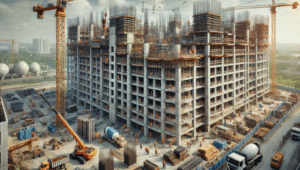
A hotel is more than a collection of rooms; it’s an experience built from the ground up. As guest expectations rise and timelines shrink, developers and owners are rethinking how they source and deliver the materials that make hotels safe, quiet, durable, stylish, and sustainable. That’s where concrete plants—whether on site for a major project, co-located nearby, or partnered through a dedicated supplier—become strategic assets. By aligning a hotel project with reliable ready-mix or precast concrete production, owners can gain tighter control over schedule, quality, cost, and long-term performance.
Below, we unpack the practical reasons a hotel would “need” concrete plants involved early and often—and how that partnership pays off from development through day-to-day operations.
The Hotel Building Boom Demands Predictable Supply ⏱️
Hotel development cycles are heating up again, placing pressure on schedules and procurement. Current pipeline data shows record activity worldwide, with tens of thousands of new rooms on the way. That scale only heightens the need for dependable, high-volume material supply that won’t derail openings or renovations. Reports tracking hotel pipelines underscore how much activity is queued up; when so many projects are moving at once, having a committed concrete production plan can be the difference between hitting an opening date and slipping a season. See recent pipeline analyses that quantify this surge in projects and rooms to understand the demand backdrop hotel builders are navigating. Lodging Econometrics’ Q2 2025 Hotel Construction Pipeline Trend Report provides a snapshot of how robust that queue is right now. Lodging Econometrics
In practical terms, a hotel that secures access to a concrete plant (or sets up a temporary on-site batch operation for large pours) gains schedule predictability. Deliveries can be sequenced to slab pours, podium levels, cores, shear walls, parking decks, and amenity spaces without competing with the rest of a busy city’s morning rush. That coordination reduces idle crane time and labor cost volatility and helps trades stay stacked and productive, instead of waiting on trucks.
Faster Builds, Fewer Unknowns: Precast and Modular Synergy 🚀
Hotels have embraced faster delivery models—particularly precast and modular—because they compress timelines and raise quality control by shifting more work off site into controlled environments. For example, industry coverage has tracked how hospitality brands and developers have leaned into modular methods to speed openings and improve consistency. When a project pairs modular or precast strategies with concrete plants prepared to manufacture components (from structural elements to façade panels and bathroom pods), cycle times can drop significantly and site risk falls with it. See trend roundups and case discussions in resources like Hotel Management’s construction trends and modular overviews covered in hospitality trade outlets. Hotel Management
Why does this matter for a hotel? Because speed converts directly into revenue. Opening sooner means capturing a season, a convention, or an event calendar. Coordinated production with a plant ensures module or panel availability aligns with crane picks and on-site crews. The logistics are cleaner, waste is lower, and the final fit-out starts earlier.
Guest-Centric Performance: Quiet, Safe, Comfortable Rooms 🔇🔥
The guest’s experience—sleep quality, privacy, a sense of security—depends heavily on the building’s envelope and structure. Concrete earns its keep here. Its mass provides excellent acoustic separation between guestrooms and corridors or stacked rooms, mitigating footfall and airborne noise without overreliance on bulky finishes. Industry design guidance highlights concrete’s inherent sound insulation and damping qualities, which reduce the need for additional layers that add cost and complexity. For an overview of acoustic performance considerations, see the technical content from the Concrete Centre on building acoustics. Acoustic performance guidance explains how mass and damping deliver reliable sound insulation in vertical and horizontal separations. Concrete Centre
Fire safety is equally critical. Concrete’s noncombustible nature and low thermal conductivity give hotels a robust, passive fire-resistant backbone across compartmentalized rooms and floors. That resilience can help a property meet stringent codes, protect egress routes, and minimize long-term risk. Resources focused on hotel sector design call out these advantages directly, noting both fire resistance and acoustic performance as signature benefits. See the sector-specific discussion of hotel buildings at the Concrete Centre for a concise summary of these attributes. Hotels and concrete performance outlines how these material properties translate to safer, quieter hospitality buildings. Concrete Centre
The takeaway: when your project is coordinated with a plant capable of consistent mixes or precast elements optimized for acoustic and fire performance, you get repeatable results floor after floor, room after room.
Durability That Lowers Life-Cycle Costs 💸
Hotels work hard. Rolling luggage, housekeeping carts, banquet setups, pool decks, loading docks, and parking structures all put a beating on surfaces and structure. Concrete shines in these high-duty zones because it’s durable, moisture-tolerant, and easy to maintain. For owners watching net operating income, fewer repairs and less downtime equal real savings.
Precast systems can be especially efficient for mid- and high-rise hotels, combining speed with long-term durability. Industry commentary has long emphasized precast’s balanced benefits—sound and fire performance, fast construction, and a “maintenance-friendly” envelope—making it a natural fit where repetitive rooms stack vertically. While methods evolve, the core advantages endure. See industry commentary tailored to hospitality on precast and its advantages in hotel applications, such as this perspective collected within hospitality trade media. Advantages of using precast in hotels summarizes benefits that map directly to life-cycle value. Hospitality Net
A concrete-savvy supply partner strengthens this value proposition by tailoring mixes (for abrasion resistance, freeze-thaw resilience, or chloride protection in coastal properties) and by prefabricating elements that minimize water intrusion points. Over decades, that translates to fewer guest-impacting repairs and better brand protection.
Sustainability Credentials Guests And Brands Care About 🌎
Today’s travelers and hotel brands pay attention to embodied carbon, responsible sourcing, and end-of-life circularity. Concrete plants are at the heart of major decarbonization moves in the built environment—introducing supplementary cementitious materials (SCMs) like fly ash, slag, natural pozzolans, and calcined clays; optimizing mix designs; and documenting emissions transparently. The sector has even launched rating initiatives to help specifiers identify lower-carbon options. For example, the Global Cement and Concrete Association introduced a Low Carbon Ratings system to bring more clarity to cement and concrete selection—a sign that verified, lower-carbon mixes are becoming mainstream. GCCA Low Carbon Ratings announcement details how this AA–G scale helps buyers prioritize sustainability. GCCA
Concrete’s decarbonization momentum is already visible in hospitality. Projects have showcased mixes that replace a portion of Portland cement with SCMs, cutting embodied carbon materially while meeting structural and finish requirements. Coverage of the Populus Hotel’s use of fly-ash-rich concrete illustrates how targeted substitutions can trim hundreds of tons of CO₂ in a single property, aligning construction with brand sustainability narratives guests will increasingly expect. For a design-community look at these material choices in a hotel context, review the American Institute of Architects’ write-up of the project’s mix strategy. Low-carbon concrete solutions in a hotel explores embodied-carbon reductions realized through SCM adoption. The American Institute of Architects
When your hotel collaborates with a plant that can certify environmental product declarations (EPDs), provide mix optimization, and document carbon intensity, you gain tangible sustainability metrics to share with guests, corporate teams, and investors—without compromising schedule or quality.
Renovations And Additions: The Quiet Workhorse Of CapEx 🔄
Not every hotel is a ground-up build. Many properties are in ongoing cycles of renovation, brand conversions, or expansions to keep up with guest expectations. In these contexts, an aligned concrete supplier becomes a recurring advantage. Think podium expansions for new F&B, a prefabricated stair tower for code upgrades, a new spa wing, or structural retrofits to support rooftop amenities. A nearby plant can deliver consistent ready-mix for small but frequent pours, or prefabricate stair flights, façade panels, or bathroom pods to shorten noisy on-site work.
Because much of this activity happens while a hotel remains open, predictability matters even more. Tight overnight pour windows, weekend picks, and off-hour deliveries require a plant that can schedule like a hotelier—calibrated to occupancy and events. Coordinated, dependable material scheduling helps keep guests happy and RevPAR intact during improvements.
Parking, Back-of-House, And Event Infrastructure That Just Works 🚧
Guests rarely see the beating heart of a hotel: loading docks, BOH corridors, banquet halls, and garages. These spaces carry heavy loads and intense turnover. Concrete’s compressive strength and durability make it the natural choice for long-span parking decks, slab-on-grade back-of-house, kitchens, and service areas. By partnering with a plant that can dial in the right admixtures and curing regimes, owners get resilient floors that shrug off thermal swings, deicing salts, grease, and rolling loads. Over time, that means fewer shutdowns and safer operations—benefits that ripple all the way to the guest experience.
Risk Management: Code Compliance, Fire Compartments, And Noise Control ✅
Hotels face strict fire and life safety codes, particularly in mid- and high-rise settings. Concrete cores, shear walls, and compartmentalized floor and wall assemblies help hotels meet and exceed these requirements inherently, limiting reliance on multiple applied systems to achieve ratings. On the acoustic side, concrete’s mass helps meet noise criteria without excessive layers that complicate construction sequencing. Industry design references focused on hotels summarize these performance wins succinctly—worth reviewing as you assemble your basis of design for the next project. Hotel-sector concrete design notes provide a useful, performance-oriented starting point. Concrete Centre
Cost Control Through Mix Optimization And Fewer Change Orders 📊
Every RFI or change order chips away at budgets and timelines. Working directly with a plant during preconstruction allows the design and construction teams to:
• Select mixes that hit strength gain targets to strip forms faster
• Balance pumpability and finish quality for large slab days
• Standardize elements (stairs, lintels, panels) to reduce field variability
• Sequence deliveries to minimize crane or crew downtime
This upfront collaboration trims contingencies, reduces schedule float, and helps prevent late-stage design substitutions that create rework. The result is a smoother path to opening day, with fewer surprises.
A Note On Trends: Why The Plant Partnership Is Becoming The Norm 📈
Trade coverage in hospitality continues to spotlight faster, smarter ways to bring hotels online—whether through modular rooms, panelized façades, or innovative logistics. Owners and brands are chasing speed to revenue, sustainability credibility, and guest-pleasing performance. Those aims all point back to materials and methods that can scale predictably. By integrating concrete plants into the delivery model—either physically on site for mega-pours or contractually through guaranteed capacity and component fabrication—hotels secure a critical path resource in a highly competitive pipeline environment. For a snapshot of what builders are prioritizing, scan trend lists directed at hotel construction decision-makers. Hotel Management’s 20 trends in hotel construction capture recurring themes around speed, quality, and adaptability that line up well with concrete-centric delivery. Hotel Management
Conclusion: Build The Experience, Not Just The Structure 💡
Hotels succeed when the guest journey is seamless—quiet rooms, safe corridors, polished lobbies, lively amenities—supported by a building that’s durable, efficient, and future-forward. Concrete plants help make that possible. They bring schedule certainty to a hot development pipeline, enable precast and modular strategies that open doors sooner, and deliver material performance that elevates the guest experience while protecting the asset over decades. Layer in credible sustainability moves through lower-carbon mixes and transparent documentation, and you have a material supply partnership aligned with what hotel brands and travelers value most.
For owners and developers, “needing” a concrete plant isn’t just about pouring slabs; it’s about de-risking the path to opening, operating more reliably, and telling a stronger story to guests and investors. Partner early, plan together, and let your material strategy become a competitive advantage that guests can feel the moment they step inside. ✨
Authority reads related to hotel construction news and trends you can explore:
• Global hotel construction pipeline reaches record high (Lodging Econometrics). Lodging Econometrics
• 20 trends in hotel construction (Hotel Management). Hotel Management
• Low-carbon concrete solutions in a hotel context (AIA coverage of Populus Hotel). The American Institute of Architects
• Hotel-sector acoustic and fire performance notes for concrete (Concrete Centre). Concrete Centre