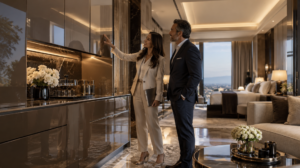
Hotel design has changed significantly over the past decade. Guests are no longer judging a property only by the comfort of the bed, the location, or the amenities. The visual experience matters from the moment a traveler sees a hotel online through the moment they walk into the lobby and enter their room. From boutique properties and urban hotels to luxury resorts and extended-stay accommodations, interior finishes now play an important role in how guests perceive quality.
For hotel owners, developers, architects, and interior designers, cabinetry has to do much more than provide storage. It must complement the overall design, stand up to frequent use, support efficient housekeeping, and help create a polished environment that looks impressive in person and in photographs. High-gloss cabinetry can meet many of those goals while giving guest rooms, suites, lounges, bars, and common areas a fresh, contemporary appearance.
The wider hospitality industry continues to place greater emphasis on thoughtful interior design. Hotel Dive has highlighted the role of thoughtful hotel design upgrades in improving the guest experience, reinforcing the importance of making interior improvements that serve a purpose beyond decoration.
A High-End Look Without Excessive Visual Clutter
Luxury hotel interiors often succeed because they feel intentional. Instead of filling a room with too many decorative elements, successful designs rely on clean lines, quality surfaces, balanced lighting, and carefully selected materials. Gloss cabinetry fits naturally into that approach.
The smooth, reflective finish creates a crisp appearance that can make a room feel newer and more refined. In guest suites, gloss-front cabinets can be used for minibars, coffee stations, entertainment centers, wardrobes, vanities, and built-in storage. In hotel lounges or reception areas, the same finish can create sleek service counters and concealed storage without overwhelming the surrounding architecture.
Gloss surfaces also work well in modern interiors because they can visually simplify cabinetry. Hardware can be minimized, integrated pulls can be incorporated, and cabinet doors can appear almost seamless. The result is a streamlined look closely associated with contemporary luxury.
For hotels undergoing renovations, that simplicity can be especially valuable. Replacing dated cabinetry with a cleaner finish can noticeably change the personality of a space without requiring every architectural element in the room to be redesigned.
Creating a Brighter, More Open Feeling
Hotel rooms often have limited square footage, particularly in major urban markets. Designers therefore look for ways to make interiors feel more open without changing the actual footprint of the room. Reflective materials can help accomplish that goal.
Gloss cabinet fronts reflect both natural and artificial light rather than absorbing it. Daylight coming through windows, decorative fixtures, and ambient lighting can move subtly across the surface, creating additional depth within the room. This can be particularly effective in smaller guestrooms, bathrooms, compact suites, kitchenettes, and extended-stay accommodations.
White, cream, pale gray, and other light-colored high-gloss finishes can create an especially bright appearance. Dark gloss finishes can produce a completely different effect, adding drama and contrast to upscale suites, hotel bars, lounges, and premium hospitality spaces when paired with warm lighting, stone, metal, or natural wood.
The importance of carefully planned environments can also be seen in Hospitality Net’s coverage of luxury hospitality design trends, where design is presented as an increasingly important part of a property’s identity, guest experience, and long-term appeal.
A Natural Fit for Contemporary Hotel Design
Modern hotels increasingly blend elements traditionally associated with hospitality, residential interiors, and lifestyle design. A guest suite may include a built-in beverage area, workstation, wardrobe, entertainment wall, vanity, and kitchenette, all within a relatively compact space. Coordinated cabinetry helps connect those separate functions visually.
That is where Gloss cabinets can become especially valuable. Their clean surfaces and modern character allow designers to create a consistent appearance throughout several parts of a room. Rather than treating the minibar, wardrobe, vanity, and storage areas as unrelated pieces, cabinetry can become part of one cohesive design.
This approach can also support hotel brand consistency. A hotel company renovating multiple rooms or several properties may want recognizable design elements that can be repeated while still allowing each location to retain its individual character.
Hotel Management’s hotel design coverage regularly focuses on architecture, interior design, renovation, guest experience, operational efficiency, and asset value. Cabinetry may represent only one component of a larger hotel project, but because it occupies so much visible surface area, its appearance can strongly influence the finished room.
A Surface That Can Strengthen Hotel Photography
The growth of online hotel booking has changed the importance of interior photography. Travelers frequently browse hotel websites, travel platforms, social media, and hospitality publications before choosing where to stay. Long before they touch the bedding or walk through the lobby, they have already formed an impression of the property from images.
Rooms that appear clean, bright, contemporary, and carefully designed can stand out during that decision-making process.
Gloss cabinetry can be particularly effective in professional interior photography because of the way the surface interacts with light. Used properly, the finish can add dimension and visual polish to an image. It also provides an attractive backdrop for decorative lighting, stone countertops, metallic fixtures, wood accents, upholstered furniture, and other premium materials.
That visual impact matters for hotels competing in design-conscious categories. Skift’s hotel industry coverage has followed the continued expansion of design-focused hospitality concepts, including properties that use distinctive design as an important element of their market identity.
For hotel marketers, this creates a direct connection between interior design and promotion. A beautifully finished suite does more than satisfy the guest staying there. It becomes part of the imagery used to sell the next reservation.
Versatility Across Guest Rooms and Public Areas
Another advantage of gloss cabinetry is its versatility. The finish is not limited to one type of hotel space or a single decorating style.
In guestrooms, it can be incorporated into wardrobes, desks, beverage stations, drawer fronts, entertainment cabinetry, luggage areas, and storage walls. In larger suites, gloss finishes can be used for extensive built-ins and kitchen areas. In hotel bathrooms, sleek vanity cabinetry can contribute to the clean atmosphere associated with modern spas.
Public areas provide additional possibilities. Gloss panels and cabinetry can be incorporated into reception desks, concierge stations, back bars, restaurant storage, coffee counters, retail displays, executive lounges, meeting spaces, and other guest-facing areas.
Designers are also able to combine gloss surfaces with contrasting materials instead of covering an entire room with one finish. High-gloss white cabinetry beside natural wood produces a very different atmosphere from black gloss paired with brass fixtures and stone. Neutral gloss fronts can provide a clean background, while deep colors can become a dramatic focal point.
That flexibility is particularly useful in hospitality because the term hotel covers a wide range of properties. As the Wikipedia overview of hotels illustrates, accommodations range from smaller properties with basic facilities to boutique hotels and upscale full-service hotels offering extensive amenities. The right cabinetry therefore depends on the type of guest experience the property wants to create.
Gloss Finishes Can Support the Luxury Experience
Luxury is often communicated through details guests notice without consciously analyzing them. The alignment of doors, the consistency of finishes, the feel of hardware, the quality of the lighting, the way different surfaces interact, and the absence of unnecessary clutter all influence the overall impression.
Gloss cabinetry can support that environment by providing a finished, tailored appearance. When designed and installed properly, large cabinet surfaces can appear more like part of the architecture than standalone furniture. This can be especially effective in upscale hotel rooms where designers want substantial storage without making the room appear crowded.
The cabinetry can disappear visually into a wall or become a prominent design feature depending on the color and configuration chosen. This gives hotel designers considerable control over how much visual attention the cabinetry receives.
In a luxury suite, for example, darker gloss cabinetry may be paired with dramatic stone and metal. In a bright coastal property, white or cream gloss cabinetry might blend into the room while reflecting natural light. A contemporary metropolitan hotel could use charcoal or black gloss surfaces to create a more sophisticated atmosphere.
Practical Considerations Matter in Hotel Projects
Appearance is important, but hotels cannot select materials based solely on aesthetics. Guest rooms experience repeated use, regular cleaning, luggage movement, spills, fingerprints, impacts, and constant turnover. Cabinet materials and finishes must therefore be specified with the operating environment in mind.
High-quality gloss cabinetry should be evaluated based on the cabinet construction, surface material, edge finishing, hinges, drawer hardware, and intended location. Cleaning requirements should also be considered during the selection process. Certain darker glossy surfaces can show fingerprints more easily than some lighter or matte materials, making housekeeping procedures an important part of the decision.
Installation quality matters as well. Reflective surfaces tend to make inconsistencies easier to notice. Door alignment, panel spacing, edge quality, and hardware installation all contribute to the final appearance.
Hotels considering a large renovation can benefit from involving experienced cabinetry professionals early in the planning process. The most successful result comes from balancing visual goals with durability, cleaning requirements, functionality, project budget, and expected long-term use.
Design Has Become Part of Hotel Competitiveness
Hotel design is no longer separate from the business strategy of a property. It influences guest impressions, photographs, marketing materials, online reviews, brand positioning, renovation planning, and potentially the perceived value of the room itself.
The American Hotel & Lodging Association’s hotel industry news reflects how broad and competitive the lodging industry has become, with hotel owners and operators continually responding to changing travel patterns, economic conditions, workforce issues, development activity, and consumer expectations.
Interior improvements can support several business goals simultaneously. A well-designed room can feel more premium, function more efficiently, create stronger marketing imagery, and reinforce the identity of the hotel.
Cabinetry is especially influential because it combines architecture, storage, and visual design within one element. A dated cabinet finish can make an otherwise renovated room feel incomplete. Modern cabinetry can help unify new flooring, lighting, countertops, furniture, wall coverings, and fixtures into one cohesive interior.
For hotel operators planning room upgrades, cabinetry deserves the same strategic attention given to other highly visible finishes.
Creating a Memorable Guest Experience Through Details
Travelers may not return home talking specifically about the cabinet doors in their hotel suite, but they remember the overall feeling of the room.
They remember whether it felt luxurious, spacious, comfortable, modern, outdated, cluttered, calm, or carefully maintained. Those impressions are created by dozens of individual design decisions working together.
Gloss cabinetry can contribute to the polished appearance guests increasingly associate with contemporary hotels. It creates clean visual lines and can help storage remain organized without making the room feel heavy.
It can also enhance the transition between different parts of a suite. A beverage center can coordinate with a television wall. A bathroom vanity can complement the wardrobe. A kitchenette can feel like part of the room instead of an unrelated addition.
When those elements share a common design language, the entire suite feels more intentional.
Gloss Cabinets and the Future of Hotel Interiors
No single material defines luxury hospitality, and gloss cabinetry will not be right for every hotel. Traditional resorts, historic properties, mountain lodges, and rustic destinations may naturally favor wood grains, textured finishes, or more traditional cabinetry.
Contemporary urban hotels, luxury residences, modern resorts, extended-stay properties, and design-forward boutique hotels can benefit greatly from the crisp aesthetic that gloss finishes provide.
The strongest hotel interiors avoid choosing a material simply because it is fashionable. Instead, finishes are selected because they support the identity of the property and contribute to the guest experience.
Gloss cabinetry works particularly well when it is integrated with lighting, flooring, countertops, wall finishes, furnishings, hardware, and architectural details. When those elements are coordinated instead of selected separately, a hotel room can achieve the sophisticated appearance associated with professionally designed luxury interiors.
Conclusion
Hotels are choosing gloss cabinets because the finish offers something valuable in modern hospitality design: a combination of sleek appearance, visual brightness, versatility, and luxury appeal. Gloss cabinetry can make compact rooms feel more open, allow built-in storage to appear more architectural, and provide a polished background for the other materials used throughout a hotel interior.
For properties planning renovations or new construction, cabinetry deserves careful consideration. Cabinets occupy a significant portion of the guest’s visual environment while also performing an important everyday function. Selecting a finish that supports the hotel’s brand, complements the room, and performs appropriately under hospitality conditions can make a meaningful difference in the finished space.
In an industry where travelers often form their first opinion of a property from photographs before they ever walk through the lobby, visible details carry more weight than ever. A clean, sophisticated cabinet finish can help transform an ordinary room into one that looks thoughtfully planned and distinctly upscale.
Gloss cabinetry gives hotels another way to create the refined, contemporary environment that today’s design-conscious travelers increasingly associate with a premium stay.