Categories
Hotel News

Why Every Hotel Should Keep Scaffolding Tools in Its Arsenal

Hotel News for Scaffolding Tools

Every hotel, whether a towering luxury high-rise or a charming boutique property, must prioritize safety, aesthetics, and upkeep. While many management teams focus on inward‑facing amenities and guest services, an often‑overlooked asset lies in maintenance preparedness: scaffolding tools. Incorporating scaffolding equipment into a hotel’s toolkit isn’t just about access—it’s about resilience, efficiency, and brand reputation. In this article, we explore why scaffolding tools are indispensable for hotels, how they benefit both operational needs and guest satisfaction, and examples of industry relevance. Let’s dive in 🏨🔧.


Operational Efficiency and Swift Maintenance

Hotels run on tight schedules. A stained ceiling, chipped façade, or malfunctioning window isn’t just an eyesore—it’s a potential guest dissatisfaction trigger. With scaffolding tools on hand, maintenance teams can quickly respond to on‑site needs. Rather than waiting for external providers to show up, hotels can deploy a trained in‑house crew or contractor using the hotel’s own scaffolding. This means:

  • Rapid response to emerging issues (leaks, paint touch‑ups, cleaning)

  • Minimal downtime in guest areas

  • Cost savings from reduced labor and rental fees

According to Hotel News Now, timely maintenance is critical for preserving guest satisfaction and reducing overall renovation costs. Their coverage emphasizes how agile hotel operations yield higher occupancy and revenue. (Hotel News Now).


Enhanced Safety and Regulatory Compliance

Safety should never be compromised. Temporary fixes may be quick, but they can also be unsafe—especially in public, high‑traffic areas like hotel lobbies or balconies. Proper scaffolding ensures stable and secure working platforms, protecting staff, guests, and property. Many local jurisdiction codes—particularly around tall buildings—require compliant scaffolding for repairs or construction. By owning and maintaining scaffolding tools, hotels can ensure:

  • Equipment meets relevant safety standard inspections

  • Staff are trained to assemble and use equipment correctly

  • Compliance with insurance and code requirements

This approach aligns with expert insights highlighted by Lodging magazine, which reports that proactive safety investments ultimately reduce liability and elevate brand trust. (Lodging).


Aesthetic Excellence and Guest Experience

First impressions matter. The exterior façade, trimmed edges, or rooftop features are the hotel’s visual identity. Whether it’s a refresh of paint, repair of architectural detail, or seasonal decoration setup (like hanging festive lights), scaffolding makes it possible to do the job neatly and safely.

Guests expect aesthetic excellence, and a well‑kept exterior signals attention to detail. When a façade is restored efficiently using scaffolding, it enhances curb appeal, elevates marketing assets (photos, listings), and fosters guest satisfaction. In fact, as pointed out in Hotel Management coverage, hotels investing in regular upkeep and visual enhancements report better online reputation scores. (Hotel Management).


Cost Control and Asset Longevity

Rental costs for scaffolding can be steep—especially if needed on short notice or during peak seasons. By owning essential scaffolding components (platforms, braces, safety rails, base plates), hotels amortize their investment over multiple uses. This reduces recurring expenses and gives flexibility in planning maintenance.

Moreover, scaffolding is an investment in asset longevity. Timely maintenance facilitated by having tools ready extends the life of external finishes, structural woodwork, and ornamental details. Instead of replacing elements prematurely, hotels can maintain them year after year. The result? Lower capital expenditure and sustained property value—benefits that contribute directly to a healthier bottom line.


Environmentally Responsible Upkeep

Sustainable operations matter to guests and investors alike. Quick, targeted maintenance using in‑house scaffolding helps avoid entire façade replacements or lengthy iterations that generate excess waste. Regular maintenance also lets teams apply eco‑friendly finishes, insulation updates, or energy-saving modifications (like sealing drafts), all while avoiding high emissions from larger-scale repair projects.

A case study mentioned in Hotel News Today underlines how small investments in preventive care lead to big gains in ESG performance. Keeping scaffolding tools in the hotel’s inventory can be part of a larger strategy for responsible, green maintenance. (Hotel News Today).


Seasonal and Promotional Flexibility

Hotels often transform their exteriors—installing banners, holiday décor, or special displays. Scaffolding gives staff the ability to mount, adjust, or remove elements safely and quickly. Without scaffolding, hotels risk using ladders or hiring external help that may not understand brand standards or timelines. With tools in‑house, operations and marketing teams can collaborate more dynamically.

Imagine switching from a summer promotion facade to a Halloween or winter holiday theme overnight. Scaffolding empowers these visual pivots without compromising safety or effort.


Training and In‑House Expertise Development

Owning scaffolding tools also presents an opportunity for staff development. Technicians can receive training in safe assembly, load‑bearing principles, and code compliance. Over time, in‑house teams become more adept, responsive, and even capable of supporting other properties in a hotel group.

This cultivated expertise strengthens organizational resilience—less dependency on external contractors, faster deployment, and better control over quality. Plus, trained maintenance staff can respond during emergencies like storm damage or urgent façade repairs, ensuring guest safety isn’t jeopardized.


Brand Reputation and Long‑Term Visibility

When guests see a clean, safe, and well‑maintained property, it reinforces confidence. Even when work is underway on exterior or entrance areas, using proper scaffolding signals professionalism and care. Hotels that visibly maintain their property—without disrupting guest experience—invite more positive reviews and return visits.

Furthermore, scaffolding tools support consistent branding. Think waterfront hotels refreshing balconies, heritage properties restoring ornate facades, or boutique inns updating signage—scaffolding makes the difference between polished transformation and patchwork.


Conclusion

In a highly competitive hospitality landscape, every asset matters—including scaffolding tools. From operational efficiency and safety to aesthetics, cost control, and brand reputation, the benefits of owning scaffolding extend far beyond simple utility. These tools empower hotels to respond swiftly, maintain high standards, comply with codes, foster sustainability, and delight guests—while saving money and building internal capability.

Investing in scaffolding tools signals a proactive approach to property care. It’s not just about solving problems—it’s about affirming your hotel’s commitment to excellence, safety, and guest experience. Whether you manage a boutique stay or a global chain, scaffolding tools aren’t optional—they’re essential.

So here’s the takeaway: empower your maintenance team, safeguard your property’s appeal, and enhance guest confidence—because when you build upwards, solid foundations start on your scaffolding.


Categories
Hotel News

Why Hotels Benefit From Having Concrete Plants In Their Corner 🏨🏗️

Concrete Plants for Hotel News

A hotel is more than a collection of rooms; it’s an experience built from the ground up. As guest expectations rise and timelines shrink, developers and owners are rethinking how they source and deliver the materials that make hotels safe, quiet, durable, stylish, and sustainable. That’s where concrete plants—whether on site for a major project, co-located nearby, or partnered through a dedicated supplier—become strategic assets. By aligning a hotel project with reliable ready-mix or precast concrete production, owners can gain tighter control over schedule, quality, cost, and long-term performance.

Below, we unpack the practical reasons a hotel would “need” concrete plants involved early and often—and how that partnership pays off from development through day-to-day operations.

The Hotel Building Boom Demands Predictable Supply ⏱️

Hotel development cycles are heating up again, placing pressure on schedules and procurement. Current pipeline data shows record activity worldwide, with tens of thousands of new rooms on the way. That scale only heightens the need for dependable, high-volume material supply that won’t derail openings or renovations. Reports tracking hotel pipelines underscore how much activity is queued up; when so many projects are moving at once, having a committed concrete production plan can be the difference between hitting an opening date and slipping a season. See recent pipeline analyses that quantify this surge in projects and rooms to understand the demand backdrop hotel builders are navigating. Lodging Econometrics’ Q2 2025 Hotel Construction Pipeline Trend Report provides a snapshot of how robust that queue is right now. Lodging Econometrics

In practical terms, a hotel that secures access to a concrete plant (or sets up a temporary on-site batch operation for large pours) gains schedule predictability. Deliveries can be sequenced to slab pours, podium levels, cores, shear walls, parking decks, and amenity spaces without competing with the rest of a busy city’s morning rush. That coordination reduces idle crane time and labor cost volatility and helps trades stay stacked and productive, instead of waiting on trucks.

Faster Builds, Fewer Unknowns: Precast and Modular Synergy 🚀

Hotels have embraced faster delivery models—particularly precast and modular—because they compress timelines and raise quality control by shifting more work off site into controlled environments. For example, industry coverage has tracked how hospitality brands and developers have leaned into modular methods to speed openings and improve consistency. When a project pairs modular or precast strategies with concrete plants prepared to manufacture components (from structural elements to façade panels and bathroom pods), cycle times can drop significantly and site risk falls with it. See trend roundups and case discussions in resources like Hotel Management’s construction trends and modular overviews covered in hospitality trade outlets. Hotel Management

Why does this matter for a hotel? Because speed converts directly into revenue. Opening sooner means capturing a season, a convention, or an event calendar. Coordinated production with a plant ensures module or panel availability aligns with crane picks and on-site crews. The logistics are cleaner, waste is lower, and the final fit-out starts earlier.

Guest-Centric Performance: Quiet, Safe, Comfortable Rooms 🔇🔥

The guest’s experience—sleep quality, privacy, a sense of security—depends heavily on the building’s envelope and structure. Concrete earns its keep here. Its mass provides excellent acoustic separation between guestrooms and corridors or stacked rooms, mitigating footfall and airborne noise without overreliance on bulky finishes. Industry design guidance highlights concrete’s inherent sound insulation and damping qualities, which reduce the need for additional layers that add cost and complexity. For an overview of acoustic performance considerations, see the technical content from the Concrete Centre on building acoustics. Acoustic performance guidance explains how mass and damping deliver reliable sound insulation in vertical and horizontal separations. Concrete Centre

Fire safety is equally critical. Concrete’s noncombustible nature and low thermal conductivity give hotels a robust, passive fire-resistant backbone across compartmentalized rooms and floors. That resilience can help a property meet stringent codes, protect egress routes, and minimize long-term risk. Resources focused on hotel sector design call out these advantages directly, noting both fire resistance and acoustic performance as signature benefits. See the sector-specific discussion of hotel buildings at the Concrete Centre for a concise summary of these attributes. Hotels and concrete performance outlines how these material properties translate to safer, quieter hospitality buildings. Concrete Centre

The takeaway: when your project is coordinated with a plant capable of consistent mixes or precast elements optimized for acoustic and fire performance, you get repeatable results floor after floor, room after room.

Durability That Lowers Life-Cycle Costs 💸

Hotels work hard. Rolling luggage, housekeeping carts, banquet setups, pool decks, loading docks, and parking structures all put a beating on surfaces and structure. Concrete shines in these high-duty zones because it’s durable, moisture-tolerant, and easy to maintain. For owners watching net operating income, fewer repairs and less downtime equal real savings.

Precast systems can be especially efficient for mid- and high-rise hotels, combining speed with long-term durability. Industry commentary has long emphasized precast’s balanced benefits—sound and fire performance, fast construction, and a “maintenance-friendly” envelope—making it a natural fit where repetitive rooms stack vertically. While methods evolve, the core advantages endure. See industry commentary tailored to hospitality on precast and its advantages in hotel applications, such as this perspective collected within hospitality trade media. Advantages of using precast in hotels summarizes benefits that map directly to life-cycle value. Hospitality Net

A concrete-savvy supply partner strengthens this value proposition by tailoring mixes (for abrasion resistance, freeze-thaw resilience, or chloride protection in coastal properties) and by prefabricating elements that minimize water intrusion points. Over decades, that translates to fewer guest-impacting repairs and better brand protection.

Sustainability Credentials Guests And Brands Care About 🌎

Today’s travelers and hotel brands pay attention to embodied carbon, responsible sourcing, and end-of-life circularity. Concrete plants are at the heart of major decarbonization moves in the built environment—introducing supplementary cementitious materials (SCMs) like fly ash, slag, natural pozzolans, and calcined clays; optimizing mix designs; and documenting emissions transparently. The sector has even launched rating initiatives to help specifiers identify lower-carbon options. For example, the Global Cement and Concrete Association introduced a Low Carbon Ratings system to bring more clarity to cement and concrete selection—a sign that verified, lower-carbon mixes are becoming mainstream. GCCA Low Carbon Ratings announcement details how this AA–G scale helps buyers prioritize sustainability. GCCA

Concrete’s decarbonization momentum is already visible in hospitality. Projects have showcased mixes that replace a portion of Portland cement with SCMs, cutting embodied carbon materially while meeting structural and finish requirements. Coverage of the Populus Hotel’s use of fly-ash-rich concrete illustrates how targeted substitutions can trim hundreds of tons of CO₂ in a single property, aligning construction with brand sustainability narratives guests will increasingly expect. For a design-community look at these material choices in a hotel context, review the American Institute of Architects’ write-up of the project’s mix strategy. Low-carbon concrete solutions in a hotel explores embodied-carbon reductions realized through SCM adoption. The American Institute of Architects

When your hotel collaborates with a plant that can certify environmental product declarations (EPDs), provide mix optimization, and document carbon intensity, you gain tangible sustainability metrics to share with guests, corporate teams, and investors—without compromising schedule or quality.

Renovations And Additions: The Quiet Workhorse Of CapEx 🔄

Not every hotel is a ground-up build. Many properties are in ongoing cycles of renovation, brand conversions, or expansions to keep up with guest expectations. In these contexts, an aligned concrete supplier becomes a recurring advantage. Think podium expansions for new F&B, a prefabricated stair tower for code upgrades, a new spa wing, or structural retrofits to support rooftop amenities. A nearby plant can deliver consistent ready-mix for small but frequent pours, or prefabricate stair flights, façade panels, or bathroom pods to shorten noisy on-site work.

Because much of this activity happens while a hotel remains open, predictability matters even more. Tight overnight pour windows, weekend picks, and off-hour deliveries require a plant that can schedule like a hotelier—calibrated to occupancy and events. Coordinated, dependable material scheduling helps keep guests happy and RevPAR intact during improvements.

Parking, Back-of-House, And Event Infrastructure That Just Works 🚧

Guests rarely see the beating heart of a hotel: loading docks, BOH corridors, banquet halls, and garages. These spaces carry heavy loads and intense turnover. Concrete’s compressive strength and durability make it the natural choice for long-span parking decks, slab-on-grade back-of-house, kitchens, and service areas. By partnering with a plant that can dial in the right admixtures and curing regimes, owners get resilient floors that shrug off thermal swings, deicing salts, grease, and rolling loads. Over time, that means fewer shutdowns and safer operations—benefits that ripple all the way to the guest experience.

Risk Management: Code Compliance, Fire Compartments, And Noise Control ✅

Hotels face strict fire and life safety codes, particularly in mid- and high-rise settings. Concrete cores, shear walls, and compartmentalized floor and wall assemblies help hotels meet and exceed these requirements inherently, limiting reliance on multiple applied systems to achieve ratings. On the acoustic side, concrete’s mass helps meet noise criteria without excessive layers that complicate construction sequencing. Industry design references focused on hotels summarize these performance wins succinctly—worth reviewing as you assemble your basis of design for the next project. Hotel-sector concrete design notes provide a useful, performance-oriented starting point. Concrete Centre

Cost Control Through Mix Optimization And Fewer Change Orders 📊

Every RFI or change order chips away at budgets and timelines. Working directly with a plant during preconstruction allows the design and construction teams to:

• Select mixes that hit strength gain targets to strip forms faster
• Balance pumpability and finish quality for large slab days
• Standardize elements (stairs, lintels, panels) to reduce field variability
• Sequence deliveries to minimize crane or crew downtime

This upfront collaboration trims contingencies, reduces schedule float, and helps prevent late-stage design substitutions that create rework. The result is a smoother path to opening day, with fewer surprises.

A Note On Trends: Why The Plant Partnership Is Becoming The Norm 📈

Trade coverage in hospitality continues to spotlight faster, smarter ways to bring hotels online—whether through modular rooms, panelized façades, or innovative logistics. Owners and brands are chasing speed to revenue, sustainability credibility, and guest-pleasing performance. Those aims all point back to materials and methods that can scale predictably. By integrating concrete plants into the delivery model—either physically on site for mega-pours or contractually through guaranteed capacity and component fabrication—hotels secure a critical path resource in a highly competitive pipeline environment. For a snapshot of what builders are prioritizing, scan trend lists directed at hotel construction decision-makers. Hotel Management’s 20 trends in hotel construction capture recurring themes around speed, quality, and adaptability that line up well with concrete-centric delivery. Hotel Management

Conclusion: Build The Experience, Not Just The Structure 💡

Hotels succeed when the guest journey is seamless—quiet rooms, safe corridors, polished lobbies, lively amenities—supported by a building that’s durable, efficient, and future-forward. Concrete plants help make that possible. They bring schedule certainty to a hot development pipeline, enable precast and modular strategies that open doors sooner, and deliver material performance that elevates the guest experience while protecting the asset over decades. Layer in credible sustainability moves through lower-carbon mixes and transparent documentation, and you have a material supply partnership aligned with what hotel brands and travelers value most.

For owners and developers, “needing” a concrete plant isn’t just about pouring slabs; it’s about de-risking the path to opening, operating more reliably, and telling a stronger story to guests and investors. Partner early, plan together, and let your material strategy become a competitive advantage that guests can feel the moment they step inside. ✨


Authority reads related to hotel construction news and trends you can explore:

• Global hotel construction pipeline reaches record high (Lodging Econometrics). Lodging Econometrics
• 20 trends in hotel construction (Hotel Management). Hotel Management
• Low-carbon concrete solutions in a hotel context (AIA coverage of Populus Hotel). The American Institute of Architects
• Hotel-sector acoustic and fire performance notes for concrete (Concrete Centre). Concrete Centre

Categories
Hotel News

Why Hotels Should Use an Online Car Appraisal for Their Fleet Vehicles

Hotel News for Car Appraisal Online

In today’s hospitality landscape, managing a fleet of vehicles—whether luxury sedans for VIP guests, shuttle vans for airport transfers, or eco-friendly cars for corporate clientele—is becoming both more sophisticated and more strategic. One tool that’s increasingly essential in this regard is the Car Appraisal Online. Why? Because accurate, fast, and verifiable vehicle valuations deliver peace of mind, financial clarity, and operational agility. In this blog, we’ll explore why hotels of all sizes stand to benefit significantly from adopting an online appraisal system for their fleet vehicles. From financial reporting to risk management, an online appraisal streamlines and solidifies hotel operations. Let’s dive in! ✨


The Financial Benefits of Precise Fleet Valuation

First and foremost, getting an accurate valuation for each vehicle in your fleet—together or individually—ensures that your financial statements are clear and compliant. A fleet appraisal provides the market value, replacement cost, and liquidation value of your commercial assets, all readily accessible and updated online when requested. These valuations are crucial for:

  • Financial reporting & tax compliance
    Knowing the exact value of your vehicles helps ensure you’re reporting assets correctly for depreciation schedules and adhering to accounting standards. This prevents tax disputes and financial audit headaches.

  • Insurance optimization & risk management
    Having reliable appraisals means your insurance coverage matches the actual worth of your assets. Under-insurance can leave you scrambling after an accident, while over-insurance wastes premium dollars. A real-time appraisal ensures you strike the right balance.

  • Loan, refinancing, or collateral decisions
    Should you pursue financing—whether for expansion or renovation—lenders often require independent appraisals as proof of collateral value. Having digital, verifiable appraisals boosts your credibility and streamlines approvals.
    Hadco International Oilfield Appraisers


Operational Advantages and Upgradability

An online vehicle appraisal system doesn’t just serve finance—it also empowers operations and planning:

  • Smart fleet replacement planning
    Hotels can track depreciation, mileage, age, and maintenance history—data points often included in digital appraisal reports—to plan replacements or upgrades for vehicles that are aging or becoming unreliable. This keeps your service smooth and avoids breakdowns that can disrupt guest experience.

  • Data‑driven remarketing and sales readiness
    Should you decide to sell off older fleet vehicles, having a trusted appraisal report positions you to set realistic asking prices and negotiate from a position of strength. It increases buyer trust and reduces time to sell.

  • Strategic asset tracking
    Online valuations combined with asset-management dashboards allow fleet managers to monitor value trends and market shifts, enabling more informed long-term decisions.


Enhancing Guest Experience and Corporate Positioning

Hotels that maintain fleets—especially ones offering unique or premium transportation—stand to benefit from the credibility that accurate, professional valuations provide:

  • If your hotel offers high-end transport options—think Rolls‑Royce limousines, luxury Sedans, or eco-shuttle vehicles—you demonstrate fiscal responsibility and brand prestige by valuing your fleet professionally.

  • Fleet appraisal transparency supports ESG and sustainability initiatives, particularly as more hotels shift toward electric vehicles (EVs). Industry opinions stress that hospitality providers must catch up to growing EV demand or risk being excluded from corporate and eco-conscious booking filters. Fleet News

  • Reliable valuation tools can also aid in justifying the investment in luxury fleet expansions—for example, The Peninsula Hong Kong’s order of bespoke Rolls‑Royce Phantoms—by clearly outlining cost vs. value and facilitating stakeholder buy-in. The Peninsula Hotels


Competitive Intelligence and Compliance

Beyond operations and guest services, online car appraisals strengthen a hotel’s competitive edge and risk profile:

  • Many hotels operate shuttle services or transport guests across state lines—airports, cruise terminals, city centers. In the U.S., such operations may fall under strict transportation regulations (e.g., Federal Motor Carrier Safety Administration rules)—needing precise financial responsibility coverage and registration. A well-documented appraisal helps demonstrate that your vehicles are insured and valued properly, reducing compliance risk. FMCSA

  • From a competitive standpoint, hotels that showcase their EV charging infrastructure and eco-fleet readiness (including accurate valuations) are more appealing to corporate travel planners and environmentally aware guests.


Why the Online Appraisal Advantage Matters

Some hotels may still rely on manual or in-person appraisals—but here’s why the online system is superior:

  • Speed and convenience: No waiting for in-person visits or paperwork—decision-makers receive valuation reports within hours or less.

  • Up-to-date and scalable: Vehicle markets fluctuate. Online tools update values based on real-time data, ensuring your reports reflect current trends.

  • Audit‑ready documentation: Digital reports with authenticated timestamps support financial audits, insurance claims, and lender reviews.

  • Remote accessibility: For multi-property hotel groups, centralized online appraisal access means corporate headquarters, regional managers, and local staff all see consistent data.


Conclusion

In summary, a Car Appraisal Online system is a powerful asset for today’s hotel operations. It:

  1. Secures financial accuracy and compliance—enhancing reporting, tax preparation, and insurance coverage.

  2. Streamlines operations—helping with maintenance planning, fleet replacement, and remarketing.

  3. Elevates guest experience—supporting luxury transport strategies, ESG goals, and brand prestige.

  4. Mitigates risk—ensuring regulatory compliance and better positioning within competitive corporate and eco-aware markets.

  5. Offers unmatched efficiency—providing rapid, verifiable, scalable valuations across multiple properties and managers.

As hotel fleets diversify and expectations rise—from electric vehicles to luxury shuttle offerings—the need for accurate, accessible fleet valuation becomes paramount. An online appraisal tool aligns with modern hotel strategy and elevates both operational and financial responsiveness.

By integrating such a capability, hotel operators safeguard their assets, optimize spending, and deliver an elevated guest experience—all while navigating complex financial, regulatory, and market dynamics with confidence. 🚗💼


References

  • On sustainability and EV charging expectations in hospitality: [Opinion: Everyone’s going electric and hotels need to catch up]Fleet News

  • On luxury fleet examples in hospitality: [The Peninsula Hong Kong expands its luxury fleet with six new bespoke Rolls‑Royce Phantoms]The Peninsula Hotels

  • On financial and insurance importance of fleet asset valuation: [The Importance of Fleet Appraisals and Commercial Vehicle Valuation for Businesses]Hadco International Oilfield Appraisers

Categories
Hotel News

Unlocking Hospitality Excellence: Why Hotel Employees Need Executive Coaching to Thrive 🌟

Hotel News for Executive Coaching

The hospitality industry is built on service, precision, and human connection. At the heart of every five-star guest experience are hotel employees—receptionists, housekeepers, concierge staff, food and beverage teams, operations managers, and general managers—working behind the scenes to keep everything running smoothly. Yet, despite their critical roles, many hotel professionals are not given the personal development resources they need to excel, lead, and grow within their organizations.

Enter executive coaching—a powerful, often underutilized tool that can transform not only leadership and performance but also morale, communication, and retention across all levels of hotel staff. Executive coaching isn’t just for CEOs and high-level leaders; it’s a vital investment in every hotel employee, especially those working in demanding, customer-facing roles.

In this article, we’ll explore why executive coaching is essential for hotel employees, how it impacts operations and guest satisfaction, and how forward-thinking hotels can build a culture of leadership that drives measurable success. 🏨✨


1. The Unique Pressure of the Hotel Industry

Hotel employees face immense pressure. From 24/7 operations and constant guest demands to seasonal staffing fluctuations and strict brand standards, hotel work is both emotionally and physically taxing.

Key challenges hotel staff face include:

  • High emotional labor: Constantly regulating emotions to deliver a polished guest experience

  • Fast-paced environment: Juggling multiple roles and responsibilities under time constraints

  • Conflict resolution: Handling guest complaints, staff disagreements, or unexpected crises

  • Leadership bottlenecks: Limited upward mobility or unclear career paths in many hotel chains

  • Burnout: Long hours, night shifts, and high turnover can lead to chronic stress

Without the proper emotional intelligence, conflict management tools, and leadership development support, hotel staff can burn out or disengage. Executive coaching addresses these challenges head-on with customized support that builds confidence, capability, and resilience.


2. What Is Executive Coaching? (And Why It’s Not Just for Executives)

Executive coaching is a structured, goal-oriented process led by a trained coach who partners with professionals to develop self-awareness, improve communication, and reach strategic goals. It’s often used by corporate leaders, but its principles apply at all levels—especially in hotels, where emotional intelligence and interpersonal skills are paramount.

According to the International Coaching Federation, executive coaching improves individual performance by up to 70%, including better work performance, communication skills, and enhanced self-confidence.

In the hotel context, coaching can help staff:

  • Navigate difficult conversations with grace

  • Provide service recovery in high-pressure guest interactions

  • Transition into leadership roles with clarity

  • Build teamwork and interdepartmental collaboration

  • Develop long-term career strategies within the hospitality industry

It’s not about telling employees what to do—it’s about unlocking their ability to think, act, and lead with intention. 🔑


3. Enhancing Guest Satisfaction Through Empowered Staff

Guest satisfaction is the currency of hotel success. One poor interaction can cascade into negative reviews, brand damage, or lost repeat business. But one positive, empowered employee can create a moment of magic that guests never forget.

When hotel employees are coached to lead themselves with confidence and purpose, the impact on guest experience is immediate:

  • More initiative: Coached employees are more likely to go above and beyond without being asked

  • Improved communication: Misunderstandings between staff and guests are minimized

  • Greater presence: Employees show up more energized, focused, and attentive

  • Consistency under pressure: Staff are trained to respond to stress without losing composure

According to Gallup, companies that invest in employee engagement see 21% higher profitability and 10% higher customer loyalty—both of which are directly tied to coaching outcomes.


4. Leadership Development at Every Level

Executive coaching isn’t only about solving today’s problems—it’s about preparing employees for tomorrow’s opportunities.

In many hotels, talented employees stagnate due to lack of training or support. Coaching helps identify and cultivate leadership potential early, ensuring a pipeline of future managers who already embody the brand’s values and culture.

Benefits of internal leadership development include:

  • Lower recruitment and onboarding costs

  • Reduced turnover through career satisfaction

  • Stronger internal promotions over outside hires

  • Greater innovation and problem-solving from within

Through coaching, hotels can develop transformational leaders—not just task managers. These individuals can motivate teams, foster psychological safety, and uphold world-class standards in operations and service. 🌍


5. Emotional Intelligence in Hospitality

Emotional intelligence (EQ) is the foundation of all successful service interactions. It includes self-awareness, empathy, regulation, motivation, and relationship management—all essential for hotel employees.

Executive coaching focuses deeply on developing EQ. By learning how to:

  • Identify emotional triggers

  • De-escalate high-stress situations

  • Manage personal energy levels

  • Read social cues accurately

  • Adapt communication to various personalities

Employees become emotionally agile. This matters not just for guest interactions but for team cohesion, which is critical in a hotel setting where departments must collaborate in real time to meet guest needs.

As Harvard Business Review states, emotionally intelligent leaders foster better engagement, performance, and team morale. Coaching accelerates EQ development far more effectively than traditional training alone.


6. Reducing Turnover and Boosting Retention

The hospitality industry has one of the highest turnover rates across all sectors. The U.S. Bureau of Labor Statistics reported turnover in accommodation and food services as high as 70% in some years.

The cost of replacing a single front-line employee can be over $5,000, not counting lost productivity or guest dissatisfaction. For management-level roles, it can reach tens of thousands.

Executive coaching is a proactive way to reverse this trend. When employees feel seen, heard, and invested in, they’re more likely to stay and grow.

Coaching increases:

  • Job satisfaction

  • Role clarity

  • Personal accountability

  • Sense of purpose

When employees know that leadership is investing in their future—not just expecting results—they become brand ambassadors and long-term assets. ❤️


7. Strengthening Hotel Culture and Team Dynamics

Great hotels run on great cultures. But cultures aren’t built through handbooks and mission statements—they’re created through daily behaviors, mindsets, and communication patterns.

Executive coaching helps hotel staff:

  • Break down silos between departments

  • Build trust and collaboration

  • Align daily actions with long-term vision

  • Increase accountability without micromanagement

  • Navigate change and uncertainty as a united team

A coaching culture doesn’t mean every employee needs a personal coach. It means that the tools and frameworks of coaching—listening, feedback, goal-setting, reflection—become part of the organizational DNA.

This leads to agile, adaptive hotel teams that thrive in an ever-evolving industry. 🧭


8. Supporting Diversity, Equity, and Inclusion (DEI)

Hotels are some of the most diverse workplaces in the world. With employees of different backgrounds, nationalities, and languages, DEI initiatives must go beyond compliance—they must be lived daily.

Executive coaching is uniquely positioned to support DEI goals. Coaches help employees:

  • Understand unconscious bias

  • Build cultural humility and cross-cultural communication skills

  • Create psychologically safe spaces for everyone

  • Advocate for equity in hiring, promotion, and team dynamics

Hotels that integrate DEI into their coaching initiatives create more inclusive environments, which leads to greater innovation, loyalty, and guest satisfaction. 🌐


9. Preparing for the Future of Hospitality

The hospitality industry is being reshaped by:

  • AI and automation

  • Contactless check-in technology

  • Changing guest expectations

  • Sustainability initiatives

  • Post-pandemic health and safety protocols

In this landscape, technical training alone won’t suffice. Hotel employees need adaptive leadership skills, emotional resilience, and strategic thinking—all hallmarks of a strong coaching program.

Coaching future-proofs the workforce by developing leaders who can pivot, innovate, and rise above disruption.

As Forbes notes, coaching is not a luxury—it’s a strategic necessity in a world of constant change.


Conclusion: Coaching Is the Competitive Advantage Hotels Can’t Ignore 🏆

The hospitality industry is about people—welcoming them, serving them, and creating unforgettable moments. But to take care of guests, hotels must first take care of their employees.

Executive coaching provides hotel employees with the tools to lead themselves and others, rise through the ranks, and create exceptional guest experiences that build loyalty and drive profit. It fuels purpose, retention, resilience, and innovation.

Whether you manage a boutique hotel, a national brand, or a luxury resort, investing in executive coaching is more than a feel-good initiative—it’s a bold step toward long-term success, excellence, and a workplace culture that thrives from the inside out.

The best guest experience begins with the best employee experience. Coaching unlocks both. 🔓


Resources for Further Reading:

Categories
Hotel News

Why a Hotel Should Invest in a Heat Pump Air Conditioner

Heat Pump Air Conditioner Hotel News

For hotels, comfort is currency. Whether it’s a luxurious five-star resort or a cozy boutique inn, the climate inside the building can make or break a guest’s experience. In today’s eco-conscious and cost-aware world, hospitality professionals are continually looking for smart, sustainable ways to improve their properties. One such investment stands out above the rest: the Heat Pump Air Conditioner. 🌍❄️🔥

Unlike traditional heating and cooling systems, heat pumps offer energy-efficient temperature control by transferring heat rather than generating it. This dual-purpose functionality can significantly reduce energy bills, lower carbon emissions, and provide consistent, reliable comfort all year long. Hotels that upgrade to heat pump systems not only save money—they also align with green initiatives, gain marketing advantages, and improve operational performance.

This comprehensive article explores why a hotel should invest in a heat pump air conditioner, covering its benefits, financial incentives, environmental impact, guest satisfaction metrics, and long-term value. Let’s dive in.


Understanding Heat Pump Air Conditioners

A heat pump air conditioner is a system that heats and cools a building by moving heat rather than generating it. In the summer, it extracts indoor heat and pushes it outside. In the winter, it pulls ambient warmth from the outside air—even in cold climates—and delivers it indoors. This transfer process is highly energy-efficient compared to traditional HVAC systems.

The two most common types of heat pumps suitable for hotels are:

  • Air-source heat pumps (ASHPs): Extract heat from the air.

  • Ground-source heat pumps (GSHPs or geothermal): Extract heat from the ground.

Both types can be scaled for commercial applications and are increasingly being adopted in the hospitality sector.


1. Energy Efficiency and Cost Savings 💸

Hotels run HVAC systems 24/7, especially in regions with extreme seasonal climates. Heat pumps offer a high-efficiency alternative to conventional systems, reducing electricity usage and utility bills.

Key Stats:

  • According to the U.S. Department of Energy, air-source heat pumps can reduce electricity use for heating by approximately 50% compared to electric resistance heating.

  • ENERGY STAR-certified heat pump systems can save hotels thousands of dollars annually in heating and cooling costs, especially in multi-room or high-occupancy settings.

By investing in heat pumps, hotels can lower operational costs, improve ROI, and redirect savings into marketing, staff training, or guest experiences.


2. Environmental Sustainability 🌱

Sustainability isn’t just a buzzword—it’s a deciding factor for modern travelers. More than ever, guests are choosing eco-friendly lodging options that reflect their values.

Heat pumps emit fewer greenhouse gases than gas furnaces or electric heaters, helping hotels meet local, national, and international sustainability goals.

Green Certifications

  • Hotels that install energy-efficient systems like heat pumps can qualify for LEED Certification from the U.S. Green Building Council.

  • They may also be eligible for Green Key, Green Seal, or Energy Star Portfolio Manager ratings, which bolster a property’s green marketing appeal.

Incorporating heat pump systems is a tangible step toward net-zero emissions, improving a hotel’s brand image and fulfilling Corporate Social Responsibility (CSR) objectives.


3. Guest Comfort and Satisfaction 😌

Comfort is the foundation of hospitality. Heat pump systems provide:

  • Precise temperature control in every room.

  • Quiet operation, enhancing sleep quality and guest relaxation.

  • Improved air quality thanks to better humidity regulation and filtration.

Guests are more likely to leave positive reviews, return for repeat visits, and recommend the property to friends and colleagues when they experience uninterrupted comfort.

In fact, tripadvisor.com and booking.com reviews frequently highlight air conditioning and heating quality as key elements of a guest’s stay. Investing in heat pumps improves star ratings and boosts overall reputation.


4. Dual Heating and Cooling Capabilities 🌀

Traditional systems often require separate equipment for heating and cooling, resulting in higher installation and maintenance costs. Heat pumps combine both functions in a single system, streamlining:

  • Equipment purchases

  • Installation processes

  • Maintenance contracts

This dual-purpose nature is ideal for hotels with limited mechanical room space or those undergoing renovations. It also simplifies staff training and troubleshooting procedures.


5. Rebates, Incentives, and Tax Credits 💰

Governments and utility companies often reward eco-friendly investments. Heat pump systems may qualify for:

  • Federal Tax Credits under the Inflation Reduction Act (IRA), which provides incentives for energy-efficient upgrades.

  • Utility company rebates, particularly in states promoting clean energy like California, New York, and Colorado.

  • State grants or low-interest financing programs designed for commercial energy retrofits.

These incentives help hotels offset upfront costs and accelerate the return on investment.


6. Long-Term Durability and Reliability 🛠️

High-quality commercial heat pump systems have a lifespan of 15-20 years with proper maintenance. They are also:

  • Modular, allowing partial upgrades or replacements as needed.

  • Less prone to combustion hazards, since they don’t rely on gas or oil.

  • Easier to monitor remotely, integrating with smart hotel systems for predictive maintenance.

When paired with advanced building management systems (BMS), heat pumps allow hotel engineers to control temperature, monitor energy use, and perform diagnostics from a centralized platform.


7. Compliance with Regulations 📜

Cities and states across the U.S. are passing aggressive emissions laws. For example:

  • New York City’s Local Law 97 requires large buildings (including hotels) to cut greenhouse gas emissions by 40% by 2030.

  • California Title 24 building energy codes continue to tighten HVAC efficiency requirements.

Hotels that invest in heat pumps today future-proof themselves against regulatory penalties and compliance risks. This proactive approach demonstrates foresight and leadership in environmental responsibility.


8. Better Indoor Air Quality (IAQ) 🌬️

Today’s guests are more health-conscious than ever. Heat pump systems often include advanced filtration and dehumidification, improving indoor air quality by:

  • Reducing allergens, dust, and mold

  • Balancing humidity to prevent dampness or dryness

  • Filtering air continuously, especially when combined with HEPA filters

This not only enhances guest comfort but also contributes to employee well-being and staff retention—two critical issues in the hospitality labor market.


9. Market Differentiation and Competitive Advantage 🏨

Hotels are always looking for ways to stand out in a crowded market. Promoting energy-efficient amenities like heat pumps can:

  • Attract eco-conscious travelers looking for green-certified stays

  • Position your hotel as a leader in innovation and sustainability

  • Offer talking points for PR, marketing, and local press releases

Millennials and Gen Z travelers—who now make up a significant portion of global travel spending—frequently filter bookings based on sustainability metrics. Highlighting heat pump upgrades can sway decisions in your favor.


10. Scalability for New Construction and Retrofits 🏗️

Whether you’re building a new resort or upgrading an existing structure, heat pump systems are flexible and scalable. They can be:

  • Zoned per floor or room, giving better temperature control for guests and staff

  • Integrated with solar panels or renewable energy, enhancing sustainability goals

  • Custom-designed for different room sizes and layouts

For retrofit projects, ductless mini-split heat pumps offer excellent efficiency without the need to tear down walls or overhaul ductwork.


Conclusion: The Heat Pump Advantage

When it comes to comfort, cost, and conscience, few systems deliver like a heat pump air conditioner. From reduced energy bills and enhanced guest satisfaction to environmental leadership and future-ready compliance, the benefits are substantial and wide-reaching.

For hotels that want to stay competitive, reduce overhead, and lead the way in hospitality innovation, the decision is clear: Invest in a heat pump air conditioner.

This isn’t just an equipment upgrade—it’s a commitment to better business, smarter sustainability, and happier guests. 🌟

To learn more about HVAC best practices in hospitality, visit:

💡 Your guests deserve comfort. Your budget deserves efficiency. Your brand deserves progress. Make the switch today and experience the transformative power of a heat pump air conditioner.

Categories
Hotel News

Why Hotels Should Partner with Chemical Cleaning of Pipelines Companies

Hotel News for Chemical Cleaning of Pipelines

In the hospitality industry, delivering an exceptional guest experience is everything. But behind the plush bedding, ambient lighting, and gourmet dining lies a complex network of plumbing systems that keep everything running smoothly. One hidden hero in maintaining operational excellence is the pipeline infrastructure — responsible for everything from clean drinking water and proper waste disposal to HVAC performance.

Over time, these pipelines can become clogged, corroded, or coated with biofilm, scale, or grease — all of which pose serious operational, environmental, and health risks. That’s where Chemical Cleaning of Pipelines comes in.

For hotels aiming to maintain a gold standard in cleanliness, efficiency, and health compliance, partnering with a chemical pipeline cleaning company is no longer optional — it’s essential. Let’s explore the major reasons why hotels should seriously consider such partnerships and how it can directly impact their reputation, operational costs, and long-term success. 🏨🔧


What Is Chemical Pipeline Cleaning?

Chemical pipeline cleaning involves using specialized cleaning agents to remove internal deposits, contaminants, and obstructions inside pipes. This process is not just about unclogging — it’s about restoring flow, improving efficiency, preventing corrosion, and eliminating microbial growth that can threaten health and safety.

Common cleaning methods include:

  • Descaling and degreasing agents

  • Acid cleaning for mineral deposits

  • Biocide flushing to remove biofilm and bacteria

  • Solvent cleaning for oil and hydrocarbon residues

  • Passivation for stainless steel systems to prevent corrosion

Professionals assess the type of deposit and use a targeted approach to dissolve or dislodge contaminants without damaging the pipes.


1. Health and Safety Compliance 🧼

Hotels are under constant scrutiny by health inspectors and regulatory agencies like the Centers for Disease Control and Prevention (CDC) and Environmental Protection Agency (EPA). Waterborne bacteria like Legionella, which thrives in plumbing systems, can lead to Legionnaires’ disease, a potentially deadly illness often linked to hotel outbreaks.

Chemical cleaning eliminates biofilms — the slimy microbial mats that harbor bacteria. Unlike mechanical cleaning, which may leave some residues behind, chemical solutions ensure a complete breakdown of microbial growth in even the smallest pipe crevices.

Benefits:

  • Protect guests and staff from exposure to harmful pathogens

  • Reduce the risk of legal claims from illnesses caused by poor water quality

  • Stay ahead of local, state, and federal compliance requirements


2. Improve HVAC and Water Heater Efficiency 💧🔥

Hotels heavily rely on heating, ventilation, and air conditioning (HVAC) systems and water heaters to deliver consistent comfort. Over time, scale buildup inside heat exchangers and piping reduces thermal efficiency, making these systems work harder to produce the same output.

According to ASHRAE, even a 1/16-inch layer of scale can reduce heat transfer efficiency by 15%.

Why It Matters for Hotels:

  • Guests expect hot showers and cool air instantly — any delays impact reviews

  • Inefficient systems consume more energy, increasing utility costs

  • Overworking boilers and chillers can lead to premature system failure and costly replacements

Chemical cleaning removes scale buildup safely, restoring equipment performance and reducing energy consumption.


3. Reduce Emergency Plumbing Calls 🚨

Reactive plumbing services are expensive, disruptive, and damaging to a hotel’s image. Emergency shutoffs, flooding, or bad odors due to clogged or corroded pipes can cause negative online reviews and lead to lost revenue.

By investing in preventive chemical cleaning, hotels avoid:

  • Late-night emergency plumbing costs

  • Downtime due to blocked water or sewer lines

  • Guest complaints about water quality, smells, or backed-up toilets

Instead of playing defense, proactive cleaning services allow hotels to stay ahead of issues and maintain a clean, efficient system.


4. Extend the Lifespan of Plumbing Infrastructure 🛠️

Corrosion and scale don’t just restrict flow — they deteriorate the integrity of the pipes themselves. Replacing a hotel’s plumbing system is not only a logistical nightmare, it can cost hundreds of thousands of dollars.

Chemical passivation and descaling services neutralize corrosive agents, helping to protect and preserve the internal surfaces of pipes and extending their usable life. This is particularly important for:

  • Hotels with older infrastructure

  • Properties located in areas with hard water

  • Resorts with high seasonal traffic

By maintaining the internal health of pipelines, hotels can avoid premature system replacement and the headaches that come with it.


5. Enhance Water Quality and Guest Satisfaction 🚿✨

Bad-tasting water, brown water from faucets, or inconsistent water pressure can ruin a guest’s experience — and they’re not shy about posting it online.

When pipes become coated with rust, scale, or biofilm, it alters the taste, smell, and appearance of water. Chemical cleaning restores water quality by removing internal contaminants and ensuring a clean, uninterrupted flow.

Added Benefits:

  • Better tasting water for drinking, cooking, and bathing

  • Fewer maintenance calls due to poor water quality

  • Increased confidence in overall facility hygiene


6. Protect On-Site Restaurants and Kitchens 🍽️

Hotels with restaurants face even higher sanitation standards. Blocked grease traps, scale in water lines, and contaminated dishwashing systems can pose serious health risks.

The FDA Food Code and local health departments require commercial kitchens to maintain strict water quality standards. Chemical cleaning of pipelines used in food preparation areas ensures that:

  • Dishwashers run efficiently with clean water

  • Ice machines and beverage stations are free from microbial contamination

  • Grease buildup doesn’t lead to plumbing backups or health violations

This is a non-negotiable for luxury and high-traffic hotels where guests dine in-house.


7. Environmental Responsibility 🌎♻️

Hotels are becoming increasingly accountable for their environmental footprint. A clogged or poorly maintained plumbing system often requires more water and more energy, placing a greater burden on natural resources.

Chemical pipeline cleaning improves resource efficiency, reduces waste, and helps align your hotel with green initiatives. Many companies now offer eco-friendly and biodegradable chemical solutions that do not harm local ecosystems.

Consider pairing this with other green hotel certifications like LEED or Green Key, and you’ll boost your brand image among eco-conscious travelers.


8. Support Preventive Maintenance Programs 🗓️

A well-run hotel has a strong preventive maintenance (PM) program. Chemical pipeline cleaning can be seamlessly integrated into quarterly or biannual PM plans, offering a predictable and efficient way to handle potential issues before they escalate.

This is particularly useful for:

  • Resorts with large water features or spas

  • High-rise hotels with vertical water delivery systems

  • Older properties that have never been chemically cleaned

Instead of waiting for visible signs of trouble, hotel facility managers can use scheduled cleanings to keep systems running at peak performance and avoid seasonal surges in maintenance requests.


9. Boost Reputation and Brand Trust 🌟

Travelers today are more informed than ever. They check reviews, look for green certifications, and expect pristine facilities.

If your plumbing system delivers subpar results — discolored water, inconsistent hot water, or odors — your guest satisfaction ratings will reflect it. And in the age of digital reviews, that can snowball fast.

Hotels that proactively invest in chemical pipeline cleaning can:

  • Advertise improved sanitation measures

  • Show commitment to sustainability and operational excellence

  • Create a cleaner, safer environment that builds trust with guests and travel partners


Choosing the Right Pipeline Cleaning Partner 🤝

Not all cleaning companies are created equal. When selecting a chemical pipeline cleaning provider, hotels should look for:

  • Experience working in hospitality environments

  • Use of EPA-approved and biodegradable chemicals

  • Customized service plans for different pipe types and system sizes

  • 24/7 availability and emergency support

  • Transparent pricing and compliance documentation

Partnering with a provider who understands the specific needs of hotels ensures a more efficient, non-disruptive process that protects both operations and guest experience.


Conclusion

Your hotel may have chandeliers in the lobby and 1,000-thread-count sheets on the beds — but if the plumbing behind the walls is clogged, corroded, or contaminated, your guests will notice.

Chemical Cleaning of Pipelines is a smart, preventative, and cost-effective strategy that ensures your hotel continues to deliver the high standard your guests expect. It improves health and safety, boosts efficiency, protects your investment, and enhances your brand reputation.

For hotels that want to operate with confidence, safety, and sustainability at the core, this partnership isn’t just recommended — it’s essential. 💼🚿


🔗 Additional Resources

Let your hotel’s infrastructure be as luxurious as your guest experience — starting with the pipes. 👨‍🔧💦

Categories
Hotel News

Why Hotels Care About Commercial & Medicare Billing 🏨💼💊

Hotel News for Medicare Billing

At first glance, it might seem like Commercial & Medicare Billing is a topic reserved strictly for healthcare providers, insurance companies, and billing administrators. But in recent years, a surprising stakeholder has emerged with a vested interest in this domain: hotels. Yes—hotels are becoming more entwined with the world of medical billing than ever before.

From medical tourism and extended-stay rehabilitation guests, to insurance-covered lodging arrangements and government reimbursement policies, today’s hotel management teams are stepping into a new frontier—where hospitality meets healthcare.

Understanding Commercial & Medicare Billing is no longer optional for hotels looking to compete in a post-pandemic economy that blends healthcare, travel, and business logistics. This article breaks down why Medicare and commercial billing matter to hotels, how it’s reshaping operations, and what proactive hotel managers can do to stay ahead of the curve.


The Growing Intersection Between Healthcare and Hospitality 🏥🏩

1. Medical Tourism: Hotels as Healthcare Partners 🌍

Medical tourism—where individuals travel for surgeries, dental care, or elective procedures—has grown into a multibillion-dollar global industry. The United States alone sees over 1.4 million inbound medical tourists annually, and many require hotel accommodations before and after treatment.

Here’s the catch: these stays are often billed to commercial insurance or even Medicare Advantage plans, depending on the patient’s policy.

Hotels that understand how commercial & Medicare billing works can:

  • Collaborate with hospitals or care facilities

  • Offer bundled service packages

  • Become preferred lodging partners for insurance-approved stays

This new model enables hotels to secure longer bookings and higher room rates, while patients enjoy comfort and proximity to care. But for that to happen smoothly, the hotel must be well-versed in what services are reimbursable and how billing codes apply.

📖 Learn more about medical tourism statistics from Patients Beyond Borders.


2. Medicare Advantage & Insurance-Sponsored Lodging 🧾

Medicare itself doesn’t traditionally pay for hotel stays, but Medicare Advantage (Part C) plans—administered by private companies—sometimes do. These insurers are looking for cost-effective alternatives to hospital stays, and partnering with hotels is one emerging solution.

Examples include:

  • Post-acute care stays: After a procedure, patients may not need a hospital bed but aren’t ready to go home. A hotel can serve as a supervised transitional space.

  • Family lodging: When patients travel long distances, Medicare Advantage may reimburse family lodging for certain treatments (e.g., organ transplants).

Hotels that partner with health systems or medical concierge services are now billing insurers directly. Understanding HCPCS, CPT codes, and CMS billing frameworks becomes critical.

📄 Centers for Medicare & Medicaid Services (CMS) – Billing & Coding Guidance


3. Long-Term Stays for Outpatient Programs 🛌

Many outpatient programs (e.g., dialysis, cancer treatments, rehabilitation) require patients to be near a facility over multiple weeks. Commercial insurers often cover transportation, lodging, and meals under pre-authorization.

Hotels offering:

  • Discounted medical-stay rates

  • Shuttle services to nearby clinics

  • Room layouts suitable for extended recovery

…can become listed as approved accommodations under insurance networks. To do that, however, management must coordinate with billing departments and understand documentation needs for insurance audits.


4. Government Contracts & Emergency Housing 💼

Hotels working with FEMA, state health agencies, or federal contracts (e.g., for COVID-19 housing) are often reimbursed through government billing mechanisms that mirror Medicare-style invoicing.

To qualify, hotels must often:

  • Use compliant billing software

  • Register with government procurement portals

  • Submit invoice codes following Medicare standards

For example, Hotel Emergency Lodging Reimbursement during the COVID pandemic followed CMS models of expense documentation. The same standards apply today for disaster relief and emergency healthcare access programs.

📘 Read about GSA lodging reimbursements and federal travel regulations


What Billing Knowledge Means for Hotel Operations 🧠

Hotels now operate in a hybrid world—part hospitality, part logistics, and part healthcare. Here’s how Commercial & Medicare Billing knowledge impacts different parts of a hotel’s operation.


Front Desk & Reservations 📞

The front desk must now understand:

  • Pre-authorizations from insurers

  • Patient ID verification

  • Accepting healthcare-specific payment systems

  • Documenting stay duration for medical necessity letters

Proper training ensures your staff knows how to process medical guests without missteps that could impact reimbursement.


Accounting & Finance Departments 💳

Medical billing often involves:

  • Delayed payments through third-party insurers

  • Use of EDI (Electronic Data Interchange)

  • Navigating ICD-10 codes for specific diagnosis-related stays

Accounting teams need to speak the language of claims, remittance, and denials—or partner with a medical billing consultant.

📄 What is EDI and how does it work in healthcare billing?


Marketing & Sales Teams 📈

Sales teams can:

  • Market directly to healthcare systems

  • Secure corporate rates with insurance networks

  • Create custom packages for chronic care guests

Marketing materials must emphasize compliance, accessibility, proximity to care, and even ADA certification—important criteria for insurers selecting lodging partners.


Operations & Guest Services 🧹

The guest experience must include:

  • Safety measures suitable for immunocompromised guests

  • 24/7 accessibility

  • Meal accommodations aligned with medical needs

  • Partnerships with in-home care providers or telehealth services

Think of it this way: your hotel is no longer just a place to sleep—it may be a temporary recovery suite under Medicare guidance.


Why Hotels Can’t Afford to Ignore Billing Knowledge ❗

Failing to understand the mechanics of Commercial & Medicare Billing can cost hotels:

  • Revenue from insurance reimbursements

  • Loss of preferred provider status

  • Reputational damage with local healthcare institutions

  • Legal trouble due to billing compliance errors

Worse yet, without proper infrastructure, hotels risk overlooking a lucrative new revenue stream emerging from the healthcare-hospitality hybrid economy.


Proactive Steps for Hotel Managers 🧭

If you’re a hotel manager looking to get ahead, here are actionable next steps:

✅ 1. Train Your Team on Healthcare Guest Protocols

Offer training sessions on:

  • Guest intake for medical stays

  • HIPAA-lite compliance awareness

  • Documentation for insurance billing


✅ 2. Partner with Local Healthcare Providers

Reach out to:

  • Hospitals

  • Outpatient centers

  • Surgery recovery services

  • Dialysis clinics

Offer discounted rates or convenience-focused packages—and ask to become a preferred lodging partner.


✅ 3. Learn the Language of Billing

Familiarize yourself and your accounting team with:

  • ICD-10 codes

  • CPT codes

  • CMS billing guidelines

  • Pre-authorization request processes

📘 Check out CMS’s guide to billing and coding


✅ 4. Invest in Medical Lodging Certification

Some organizations offer programs to certify hotels as medical-stay ready, covering areas such as:

  • Room safety

  • Cleanliness

  • Accessibility

  • Insurance compliance


✅ 5. Consider Hiring a Healthcare Billing Consultant

Especially if you’re in a metro area near major hospitals, a consultant can help you:

  • Understand billing codes

  • Implement compliant invoicing systems

  • Negotiate contracts with insurance providers


Conclusion: The Future of Hospitality Includes Healthcare 🌟

The wall between hospitality and healthcare is thinning—and for good reason. As health insurance models shift toward value-based care and patient comfort, hotels are uniquely positioned to serve the next generation of healthcare consumers.

But comfort alone isn’t enough. To fully serve and grow in this space, hotels must understand the financial mechanics behind the scenes—and that includes mastering Commercial & Medicare Billing.

By stepping up, your hotel doesn’t just offer rooms—it offers recovery, relief, and resilience.

📞 Ready to explore medical lodging partnerships or streamline your billing operations? Connect with a billing expert or reach out to your local healthcare providers. The opportunity is already knocking.

Categories
Hotel News

What is the Best Whey Protein for Female to Take While Staying at a Hotel?

hotel news for whey protein for female

Traveling can be a thrilling experience, especially for women juggling fitness goals, careers, and family life. But whether it’s for business, vacation, or a wellness retreat, staying at a hotel can disrupt your fitness routine—especially your nutrition. One key component often neglected while on the road is protein intake, and more specifically, whey protein—a quick, convenient, and powerful source of fuel that helps you stay on track.

But with so many options on the market, what is the best whey protein for female travelers to take while staying at a hotel? This guide breaks it down, covering the top whey protein picks, what to look for, how to use it in a hotel setting, and how it supports your goals—whether it’s fat loss, muscle toning, or overall wellness.


💪 Why Whey Protein Is Crucial for Women on the Go

1. Protein Powers Recovery and Lean Muscle

Whey protein is considered a complete protein—meaning it contains all nine essential amino acids. It’s also rich in leucine, which is critical for muscle recovery and repair after workouts. For women aiming to tone up or avoid muscle loss while traveling, whey protein is an essential ally.

2. Supports Weight Management

Whey protein helps increase satiety, curb cravings, and support fat metabolism. A 2020 review published in Nutrients concluded that increased protein intake, especially from whey, can lead to better weight management outcomes.

3. Convenient Nutrition

Let’s be honest—hotel breakfast bars and mini fridges don’t always offer the best fuel. Whey protein lets you get a clean, controlled meal or snack without relying on processed or sugary alternatives.


🧳 Key Factors to Consider When Choosing Whey Protein for Hotel Stays

✅ 1. Portability

Look for single-serve sachets, travel-sized tubs, or brands that offer individual packets. You don’t want to lug around a 5-lb tub of protein powder.

✅ 2. Clean Ingredients

Skip the brands with artificial sweeteners, synthetic flavors, or questionable additives. Go for those with grass-fed whey, non-GMO, low sugar, and minimal ingredients.

✅ 3. Taste & Mixability

You won’t have your blender on hand, so choose a powder that mixes well with water in a shaker bottle or even just a spoon and cup.

✅ 4. Protein Content Per Serving

Aim for at least 18–25g of protein per scoop to support your daily intake goals, especially if you’re active or meal-skipping.

✅ 5. Brand Trust & Transparency

Stick with brands that undergo third-party testing, provide transparent sourcing, and have positive reviews from female consumers.


🥇 The Best Whey Protein for Female Travelers (Hotel-Friendly Options)

Let’s dive into the top recommendations, including flavors, benefits, and travel tips.


1. Naked Whey – Grass-Fed Protein Powder

Why it’s great:
Naked Whey is known for its minimalist ingredients—just one: grass-fed whey protein concentrate. It’s perfect for health-conscious women who want clean fuel without any unnecessary extras.

  • Protein: 25g per serving

  • Sugar: 2g

  • Flavors: Unflavored, Vanilla, Chocolate

  • Mixes well with: Water, almond milk, or hotel coffee

  • Packaging Tip: Scoop into mini Ziploc bags before you travel

🔗 Naked Whey Official Site


2. Optimum Nutrition Gold Standard 100% Whey – Single Serve Packets

Why it’s great:
This iconic brand offers individually portioned packets—ideal for stuffing in your purse, gym bag, or carry-on. It blends easily and comes in delicious flavors.

  • Protein: 24g per serving

  • Sugar: 1g

  • Flavors: Double Rich Chocolate, Vanilla Ice Cream, Mocha Cappuccino

  • Extra perks: Enzymes for better digestion

🔗 Optimum Nutrition Whey Packets


3. Legion Whey+ – For Active Female Athletes

Why it’s great:
Legion Whey+ is made from 100% grass-fed whey isolate and is sweetened with stevia and erythritol. It’s a favorite among athletic women who track macros and demand clean fuel.

  • Protein: 22g per scoop

  • Sugar: 0g

  • Flavors: Birthday Cake, Chocolate Peanut Butter, French Vanilla

  • Travel tip: Pre-measured into snack-size bags for quick mixing in a shaker

🔗 Legion Athletics Whey+


4. OWYN Plant-Based Protein (Honorable Mention 🌱)

If you’re sensitive to dairy or avoiding whey, OWYN’s plant-based shakes come pre-mixed and travel-friendly. They’re not whey, but a great hotel fridge option for women who need vegan alternatives.

  • Protein: 20g per bottle

  • Sugar: 4g (from organic cane sugar)

  • Flavors: Smooth Vanilla, Dark Chocolate, Cookies & Creamless

  • Perk: Shelf-stable until opened

🔗 OWYN Protein Drinks


5. Dymatize ISO100 – Hydrolyzed for Quick Absorption

Why it’s great:
This whey isolate is hydrolyzed for faster digestion—great after a hotel gym session or fasted cardio. Plus, it comes in indulgent dessert flavors with no lactose.

  • Protein: 25g

  • Sugar: <1g

  • Flavors: Gourmet Chocolate, Fruity Pebbles, Cocoa Pebbles

  • Best use: Post-workout shake with cold water

🔗 Dymatize ISO100


🧃 How to Use Whey Protein at a Hotel (Without a Kitchen)

Traveling doesn’t have to mean falling off your fitness routine. Here are easy and practical hotel hacks to use whey protein effectively:

🍶 1. Bring a Shaker Bottle

It takes up minimal space and allows you to mix protein with water, almond milk, or cold brew. Clean it with warm water in the hotel sink.

🧊 2. Use Hotel Ice Buckets + Water Dispensers

Mix your shake with cold filtered water from the hotel’s gym or lobby water station.

☕ 3. Add to Hotel Coffee

Unflavored or vanilla whey mixes beautifully with black coffee, turning it into a high-protein breakfast latte.

🥣 4. Stir into Instant Oatmeal or Yogurt

Pack travel oatmeal packets and stir in your whey for an easy microwave-free protein breakfast.

🥛 5. Mix with Almond Milk or Bottled Water

Grab almond milk or water bottles from the hotel lobby or nearby convenience store to prep a protein shake on the fly.


🚺 How Whey Protein Supports Female Fitness Goals While Traveling

Whey protein isn’t just about bulking up. Here’s how it serves female-specific wellness goals:

🏃‍♀️ 1. Boosts Metabolism

Protein has a higher thermic effect than carbs or fats, meaning your body burns more calories digesting it. That’s a win when you’re eating out more often.

🧘‍♀️ 2. Preserves Lean Muscle

Especially important during travel when workouts might be shorter or less intense.

🧠 3. Improves Mental Focus

Stable blood sugar and consistent nutrition can support better energy, mood, and brain function.

🌿 4. Supports Hormonal Balance

Protein intake helps stabilize insulin, cortisol, and estrogen levels, especially during stressful travel or time zone changes.


📝 Final Checklist for Packing Whey Protein in Your Hotel Bag

✅ Individual packets or pre-measured servings
✅ Shaker bottle
✅ Travel-friendly liquid (almond milk, water bottles, cold brew)
✅ Backup snack (nuts or granola)
✅ Trash bag or Ziploc for used scoops


🌈 Conclusion: Choose Smart, Stay Strong

Travel doesn’t have to throw you off track. In fact, with the best whey protein for female, you can actually stay stronger, leaner, and more energized while away from home. The best whey protein for females staying at a hotel is one that is clean, convenient, and tailored to your health goals. Brands like Naked Whey, Legion, and Optimum Nutrition give you all the performance without compromise.

So next time you pack for your trip, don’t forget your shaker and your favorite flavor—because being away from home shouldn’t mean being away from your goals 💖🏋️‍♀️

Categories
Hotel News

Why an Arlington, TX Hotel Would Need Bathroom Remodeling 🛁✨

Hotel News for Bathroom Remodeling

Arlington, Texas is a hub of tourism, business, and entertainment. With attractions like AT&T Stadium, Globe Life Field, and Six Flags Over Texas, hotels in the area must maintain a high standard to attract and retain guests. One of the most critical — yet often underestimated — parts of a guest’s hotel experience is the bathroom.

A clean, modern, and functional bathroom can significantly impact guest satisfaction, online reviews, and repeat business. In a competitive market like Arlington, bathroom remodeling isn’t just a luxury — it’s a necessity. Whether it’s for compliance, aesthetics, operational efficiency, or guest experience, investing in bathroom updates is one of the smartest moves a hotel can make.

Let’s dive into the many reasons an Arlington hotel would benefit from remodeling its bathrooms.


The Value of First Impressions 🚪

Travelers today are savvy. They browse online reviews, compare photos, and read through amenities before they even think about booking a room. One of the top things they look for? The bathroom.

Outdated bathrooms with peeling tiles, stained grout, or leaky faucets are an instant turn-off. A study by J.D. Power found that bathroom cleanliness and appearance are among the top factors influencing overall hotel guest satisfaction.

A remodeled bathroom — with stylish tile, spacious layouts, and modern fixtures — communicates professionalism, comfort, and quality. It sets the tone for the entire stay.


Meeting ADA Accessibility Standards ♿

Remodeling isn’t always about luxury — sometimes, it’s about compliance.

Hotels in Arlington must meet the requirements of the Americans with Disabilities Act (ADA). According to ADA.gov, hotel bathrooms must include features like grab bars, roll-in showers, accessible sinks, and maneuvering space.

If a hotel hasn’t updated its bathrooms recently, it may not be compliant — putting the business at risk of fines, lawsuits, or loss of customers. Remodeling allows you to bring each bathroom up to code while improving the guest experience for all travelers.


Competitive Advantage in the Arlington Market 🏨

The Arlington hospitality scene is booming, with both large chain hotels and boutique accommodations competing for attention. To stand out, hotels must offer something extra.

Bathroom remodeling can set a hotel apart by offering:

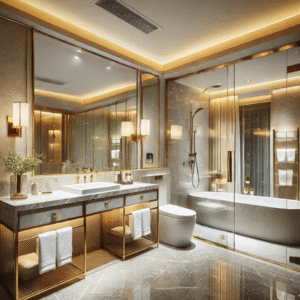
  • Walk-in glass showers instead of outdated tubs

  • LED backlit mirrors and eco-friendly lighting

  • High-end finishes like granite or marble countertops

  • Water-saving toilets and faucets

Travelers associate upgraded bathrooms with higher-value experiences. And with platforms like Tripadvisor and Booking.com, happy guests often leave glowing reviews — increasing visibility and bookings.


Aligning With Modern Sustainability Practices 🌎

Sustainability is no longer optional — it’s a demand. More guests are looking for eco-conscious hotels.

Remodeling allows a hotel to install energy-efficient and water-saving fixtures that comply with EPA WaterSense and ENERGY STAR standards. These updates not only appeal to environmentally-conscious travelers, but they also reduce water and energy costs long-term.

From dual-flush toilets to motion-sensor faucets, these small changes make a big impact on both the planet and the bottom line.


Enhancing the Guest Experience 💆‍♀️

A luxurious bathroom can transform a basic overnight stay into a spa-like escape. Guests today expect more than just clean towels and shampoo — they want an experience.

Remodeled bathrooms offer amenities like:

  • Rainfall showerheads

  • Heated floors

  • Smart mirrors with built-in lighting and anti-fog features

  • Towel warmers

These amenities contribute to positive reviews, social media sharing, and higher guest satisfaction. According to Hotel Management Magazine, bathrooms are among the most important hotel features influencing positive reviews.


Reducing Long-Term Maintenance Costs 🛠️

Older bathrooms often require frequent repairs — whether it’s a dripping faucet, cracked tile, or poor drainage.

Remodeling gives you the opportunity to replace outdated plumbing and materials with durable, modern options. Investing in quality materials now means fewer calls to maintenance in the future — saving money and avoiding downtime.

According to Cvent, renovating rooms leads to reduced operational disruptions and increased productivity from maintenance teams.


Increasing Room Rates and Revenue 📈

One of the most tangible benefits of bathroom remodeling is the ability to raise nightly rates.

When guests perceive a room as higher quality, they’re willing to pay more for it. A bathroom remodel can increase perceived value and justify higher pricing — especially during high seasons in Arlington, when events and conferences drive hotel demand.

Hotels that have remodeled often report an increase in RevPAR (Revenue Per Available Room), which directly impacts profitability.


Supporting Hotel Branding and Design Cohesion 🎨

Your hotel brand extends to every inch of the property — including the bathrooms. If your guest rooms are updated but your bathrooms still reflect a 1990s style, there’s a disconnect.

A remodel allows for design cohesion. Whether your hotel leans modern, rustic, industrial, or boutique, the bathroom should match the aesthetic and feel of the rest of the space.

Consistent branding builds trust with guests and reinforces your hotel’s unique identity.


Preparing for Future Trends 🧠

Bathroom technology is evolving fast. Smart bathrooms with voice-activated lighting, occupancy sensors, and app-controlled amenities are making their way into high-end hotels — and eventually, they’ll be expected at mid-range levels too.

Remodeling gives Arlington hotels a chance to future-proof their property. By installing the infrastructure for modern tech now (such as power outlets, Wi-Fi integration, and moisture-resistant smart devices), hotels can keep pace with guest expectations for years to come.


Adapting for Different Guest Demographics 👨‍👩‍👧‍👦

Arlington hosts a wide variety of guests — from families and sports fans to business travelers and seniors.

Bathroom remodeling allows hotels to customize some bathrooms to specific demographics. For instance:

  • Installing child-friendly bathtubs in family suites

  • Adding senior-access features in designated rooms

  • Offering minimalist spa-style layouts in executive rooms

By aligning bathroom features with guest types, hotels can increase satisfaction and drive repeat business.


Staying in Step With Arlington’s Growth 📊

The city of Arlington continues to grow as a destination for business and entertainment. With developments like the Arlington Entertainment District and increased conference activity, the hotel industry is poised to thrive.

But growth brings competition. As new hotels are built with modern amenities, older hotels must invest in upgrades — especially bathrooms — to stay relevant.


Partnering With Local Bathroom Remodeling Experts 🧰

Hiring experienced local contractors ensures compliance with city codes and design that fits regional preferences. Look for professionals who:

  • Understand hotel infrastructure

  • Offer fast turnaround to minimize room downtime

  • Are familiar with Arlington’s permit requirements and local trends

While national companies may seem appealing, local Arlington remodelers bring a deeper understanding of the city’s architecture, regulations, and guest expectations.


Conclusion: A Smart Investment for Arlington Hotels 💡

Bathroom Remodeling Arlington is more than a cosmetic update — it’s a strategic business move. In a competitive hospitality market like Arlington, upgrading hotel bathrooms leads to:

  • Better guest experiences

  • Higher occupancy rates

  • Reduced maintenance costs

  • Higher room pricing potential

  • Compliance with accessibility and sustainability standards

In short, it’s an investment that pays for itself through increased bookings, glowing reviews, and long-term efficiency.

If your hotel is ready to elevate the guest experience, attract more visitors, and stay competitive in Arlington’s booming market — now is the time to consider bathroom remodeling. The returns are tangible. The impact is lasting. And your guests? They’ll thank you for it. 🛁✨

Categories
Hotel News

Why Hotel Employees Need Business Management Courses

hotel news for business management courses

In the fast-paced and customer-focused world of hospitality, the performance of hotel employees can make or break a guest’s experience. While traditional hospitality training focuses heavily on service delivery, customer interaction, and operational know-how, there is one area that is often overlooked but incredibly impactful—business management education.

Whether it’s a front desk agent, housekeeping manager, food and beverage supervisor, or general manager, business management courses can elevate hotel staff from routine task-doers to strategic contributors. In a world where the hospitality industry is being redefined by digital transformation, evolving guest expectations, and economic uncertainties, equipping hotel employees with business acumen is not a luxury—it’s a necessity.

Let’s explore why business management courses are essential for hotel employees and how they can significantly benefit the hotel, its guests, and the individual careers of hospitality professionals.


Understanding Business Management in the Hospitality Context

Business management, in its simplest form, involves the coordination and organization of business activities to achieve defined objectives. In the hotel industry, this can span from managing finances and operations to understanding marketing strategies and workforce planning.

Unlike generic business courses, hospitality-specific business management education blends traditional business principles with real-world hotel scenarios. It prepares employees to make data-driven decisions, improve efficiencies, maximize revenue, and lead teams more effectively.

This kind of training is crucial for both aspiring managers and line-level employees looking to move up in their careers.


The Unique Challenges of Hotel Operations

Hotels are 24/7 operations. They involve a wide range of departments—front desk, housekeeping, maintenance, sales, food and beverage, HR, marketing, finance, and more. With each area interdependent, even small inefficiencies in one department can ripple across the entire property.

Moreover, the hospitality industry is extremely sensitive to external factors like tourism trends, seasonality, global events, inflation, and labor shortages. A business-savvy workforce can help hotels respond proactively rather than reactively.

Let’s look at how business management knowledge helps hotel staff in key ways.


1. Enhances Leadership and Decision-Making Skills

One of the top reasons hotel employees need business management education is to build leadership confidence. Many employees are promoted based on tenure, but without management training, they often struggle to lead effectively.

Business management courses teach critical skills like:

  • Strategic planning

  • Conflict resolution

  • Time and resource allocation

  • Delegation and team development

  • Performance evaluation

  • Financial literacy for managers

Imagine a housekeeping supervisor who understands labor forecasting and can reduce overtime by scheduling more efficiently. Or a front office manager who knows how to adjust pricing strategy based on occupancy trends. These decisions directly impact the bottom line.

👉 According to Forbes, business acumen is one of the most underrated but crucial leadership skills in any industry—including hospitality.


2. Improves Financial Understanding and Accountability

Hotels run on thin margins. Every employee, especially those in managerial roles, must understand how their department affects the hotel’s financial health.

Business management courses often include modules on:

  • Budgeting and cost control

  • Profit and loss (P&L) statements

  • Revenue management

  • Key performance indicators (KPIs)

  • Return on investment (ROI)

With financial literacy, a food and beverage manager can monitor food waste, a maintenance supervisor can make smarter purchasing decisions, and a front desk agent can upsell effectively knowing how it impacts average daily rate (ADR) and revenue per available room (RevPAR).

Training staff in these areas also fosters greater ownership and accountability, which can lead to a stronger team culture and improved financial outcomes.


3. Builds Customer-Focused Business Thinking

At the heart of hospitality is the guest experience—but great experiences are rarely accidental. They’re the result of intentional strategy, planning, and continuous improvement.

Business management education helps hotel staff analyze customer feedback, track satisfaction metrics, and align team efforts with guest expectations.

By understanding concepts like:

  • Brand reputation management

  • Net Promoter Score (NPS)

  • Customer lifetime value (CLV)

  • Market segmentation

…employees can think beyond their daily tasks and start making business-minded choices that contribute to guest satisfaction and retention.

For example, when a front desk agent sees a dip in positive reviews, they can help brainstorm service improvements instead of assuming it’s “just a bad week.”

📈 A report by McKinsey & Company highlights how customer-centric thinking is critical to growth in service industries, including hospitality.


4. Prepares Staff for Promotions and Career Growth

One of the biggest pain points in hospitality is employee turnover. Many hotel workers feel there is little room for advancement, leading to burnout or departure.

But when hotels invest in management training, they create clear career pathways.

Business education gives employees the skills and confidence to apply for leadership roles. It signals that the hotel values internal promotion, which increases morale and retention.

Courses in team dynamics, organizational behavior, and operations management also prepare workers for cross-departmental roles, making them even more valuable.

For ambitious staff members, having formal training in business management is often a requirement for moving into roles like:

  • Assistant General Manager (AGM)

  • Director of Operations

  • Revenue Manager

  • Human Resources Manager

  • Sales and Marketing Director

Many of these positions command significantly higher salaries and broader responsibilities. A certification or course can be the tipping point for a promotion.


5. Strengthens Communication and Collaboration

Hotels thrive when departments work together seamlessly. However, in many properties, communication gaps lead to frustration, inefficiencies, and errors.

A well-structured business management program includes team-building exercises, collaboration training, and interpersonal communication strategies.

By learning:

  • Active listening

  • Emotional intelligence

  • Non-verbal communication

  • Organizational culture

…employees are better equipped to resolve misunderstandings, handle guest complaints, and coordinate across departments.

This is particularly crucial in larger properties or brands with complex org charts. Improving internal communication can reduce stress, prevent duplication of effort, and elevate the guest experience.


6. Fosters Innovation and Strategic Thinking

The most successful hotels aren’t just reacting—they’re evolving. From contactless check-ins and AI-based personalization to eco-friendly operations, innovation is reshaping hospitality.

Employees trained in business management are better equipped to contribute new ideas. They understand how to analyze risks, validate ideas, and implement changes.

Whether it’s suggesting a new loyalty program or redesigning housekeeping workflows, employees who think like business leaders can help the hotel stay ahead of the curve.

🎯 Harvard Business Review discusses the importance of building “intrapreneurship” within teams—especially in service-based industries (source).


7. Adapts Staff to a Rapidly Changing Industry

The hospitality industry is in flux—post-COVID recovery, labor shortages, inflation, shifting guest expectations, and the rise of AI and digital booking platforms.

Hotels that survive and thrive are those with flexible, future-focused teams. Business management courses often include content on:

  • Industry trends

  • Change management

  • Risk mitigation

  • Digital transformation

Equipped with these skills, hotel employees can respond faster and smarter to disruption. They can also help implement new systems, adapt to changing SOPs, and assist in retraining efforts.

It’s about turning potential chaos into opportunity.


Where Can Hotel Employees Take Business Management Courses?

Several organizations offer business-focused hospitality training, including:

For hotels looking to offer internal training, partnering with a local college or online learning platform can be a cost-effective solution.


Real-World Examples of Success

Consider the case of Marriott International, which offers extensive internal training and business education pathways. Their “Voyage” program equips recent graduates with leadership and business strategy training, preparing them for manager-level roles within 12–18 months.

Or Hilton, which provides business training through its Hilton University platform. These efforts have contributed to its consistently high rankings on “Best Places to Work” lists.

These companies understand the long-term return on investment: better guest experiences, more efficient operations, and lower turnover.


Conclusion: Smart Hotels Invest in Smart People

In hospitality, it’s easy to focus solely on customer service and daily operations. But the most sustainable success comes when employees are empowered with the knowledge and skills to think like business leaders.

Business management courses transform hotel employees from passive task performers into proactive problem-solvers, strategic thinkers, and confident leaders. They improve performance at every level, from the front desk to the executive suite.

If you’re a hotel owner, HR director, or general manager, consider how a business education program could lift your team—and your profits.

If you’re a hotel employee or aspiring manager, don’t wait for permission. Start learning today. Your future self (and your future salary) will thank you.


Want to learn more? Explore these hospitality business training resources: